The path to Nirvana – Bowman heat exchangers!
Nirvana Spa provides a relaxed Mediterranean holiday experience, with stunning swimming, spa and wellness pools heated by Bowman Heat Exchangers.

Used to cool the hot, compressed air from the turbo before it reaches the engine, the intercoolers improve engine efficiency and reduce emissions for marine and land-based stationary engines.
Exhaust gas heat exchangers are designed to recover waste heat energy from the exhaust stream of reciprocating engine powered generating sets.
Bowman 'copper free' fuel coolers are compact, highly efficient heat exchangers suitable for fuel conditioning rigs in the automotive testing industry.
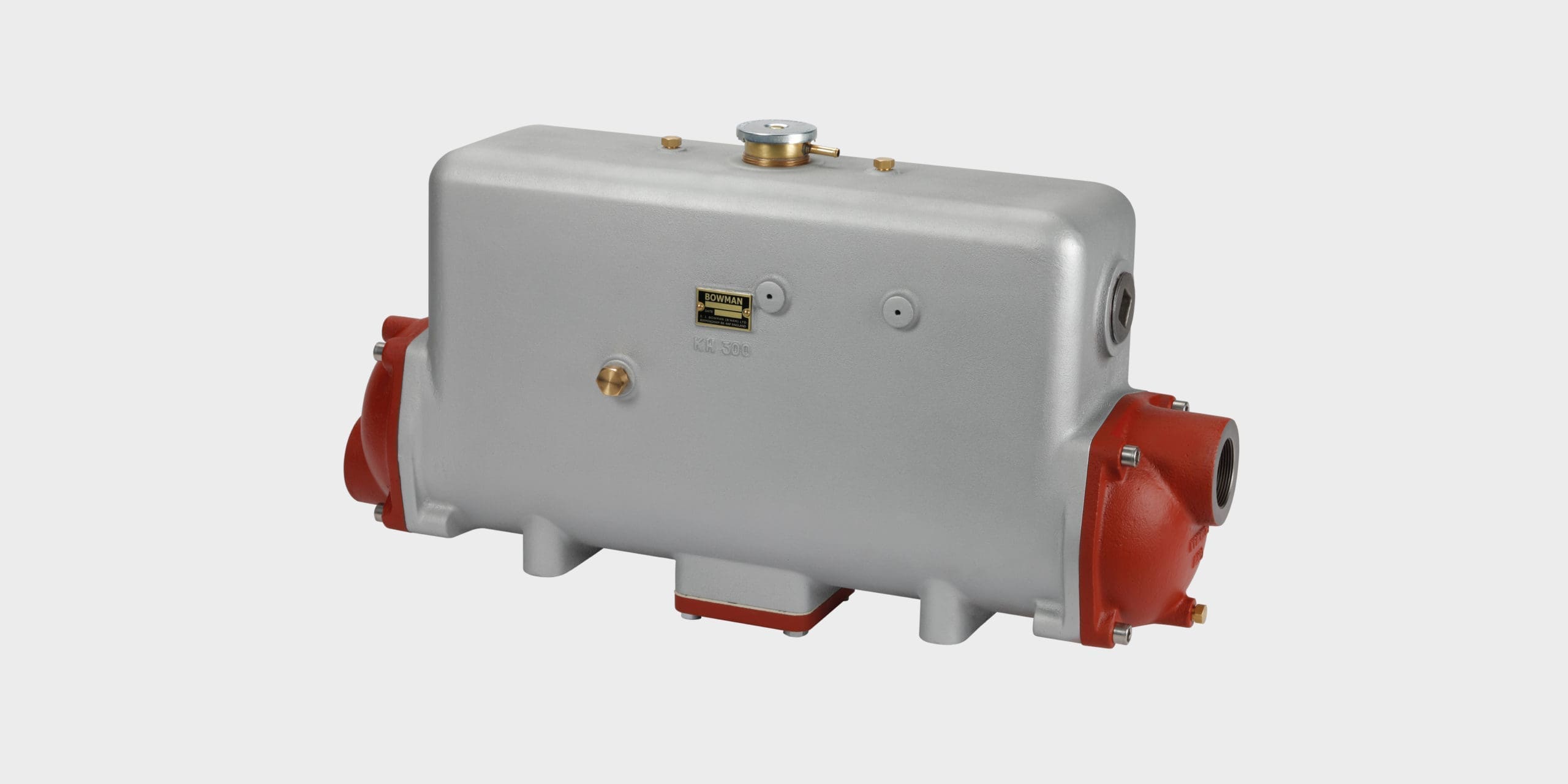
Engine coolant header tank heat exchangers for marine propulsion, gensets or stationary land-based engines.
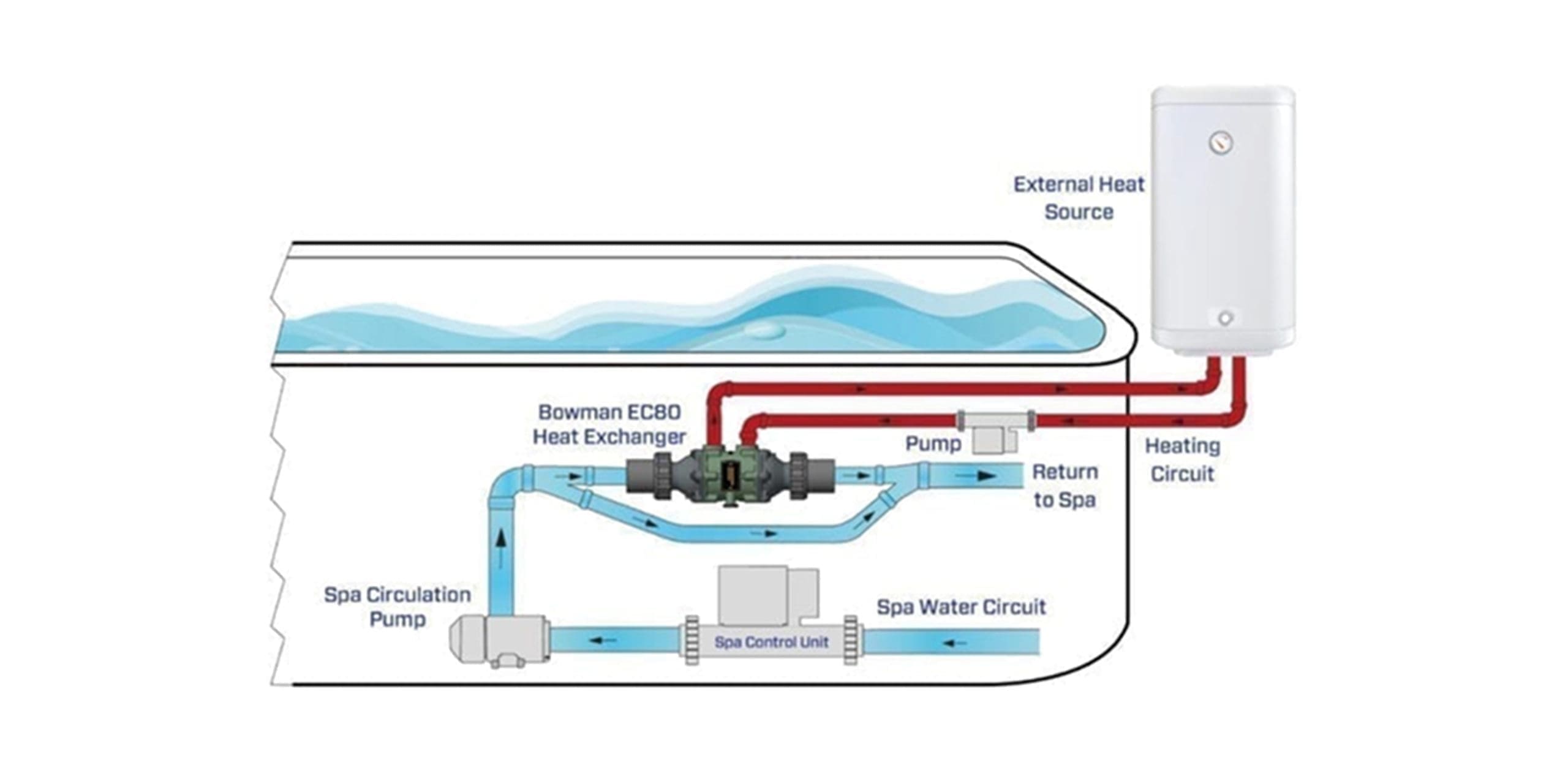
Bowman EC 80-5113-1T heat exchangers provide a new solution for heating spas and hot tubs in just a fraction of the time taken by traditional electric heaters.
Highly efficient heat transfer solutions for cooling marine, land-based and underground hydraulic systems.
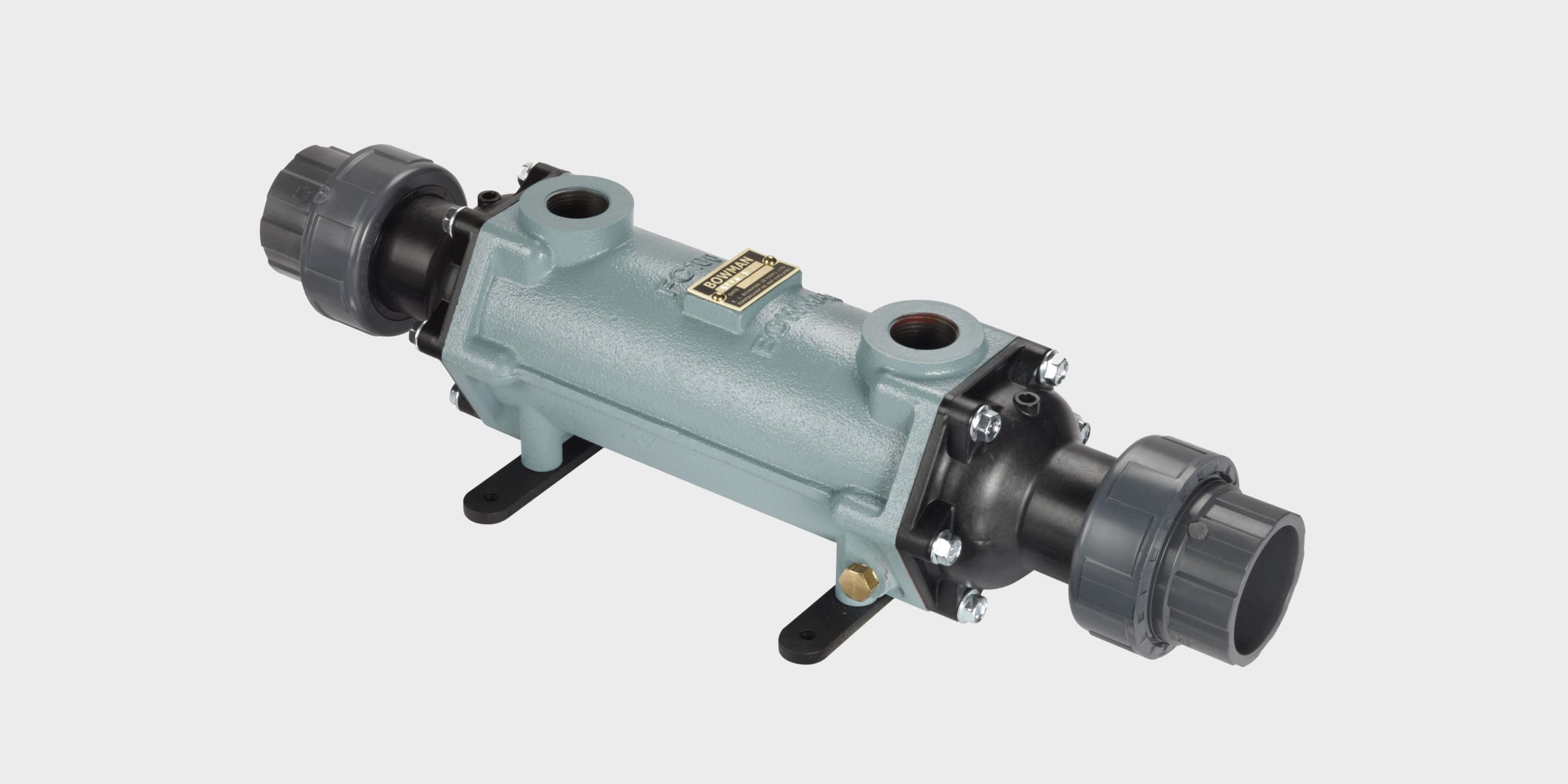
Bowman inline plate heat exchangers are a compact, economical solution for high efficiency heat transfer.
Bespoke cooling solutions for a range of popular marine engines from major OEMs, including coolant heat exchangers, charge air coolers, plus combined heat exchangers and exhaust manifolds, suitable for cooling marine engines up to 1 MW.
Bowman has a range of highly efficient oil coolers designed for marine and industrial engines and transmissions.
Efficient heat exchangers for cooling electric marine motors, hydrogen fuel cells, battery packs, chargers, AC-DC converters, DC-DC converters, inverters and associated equipment for electric and hybrid marine propulsion and charging systems.
Highly efficient heat transfer solutions for cooling a variety of applications where air and fluids need to be cooled by fluids.
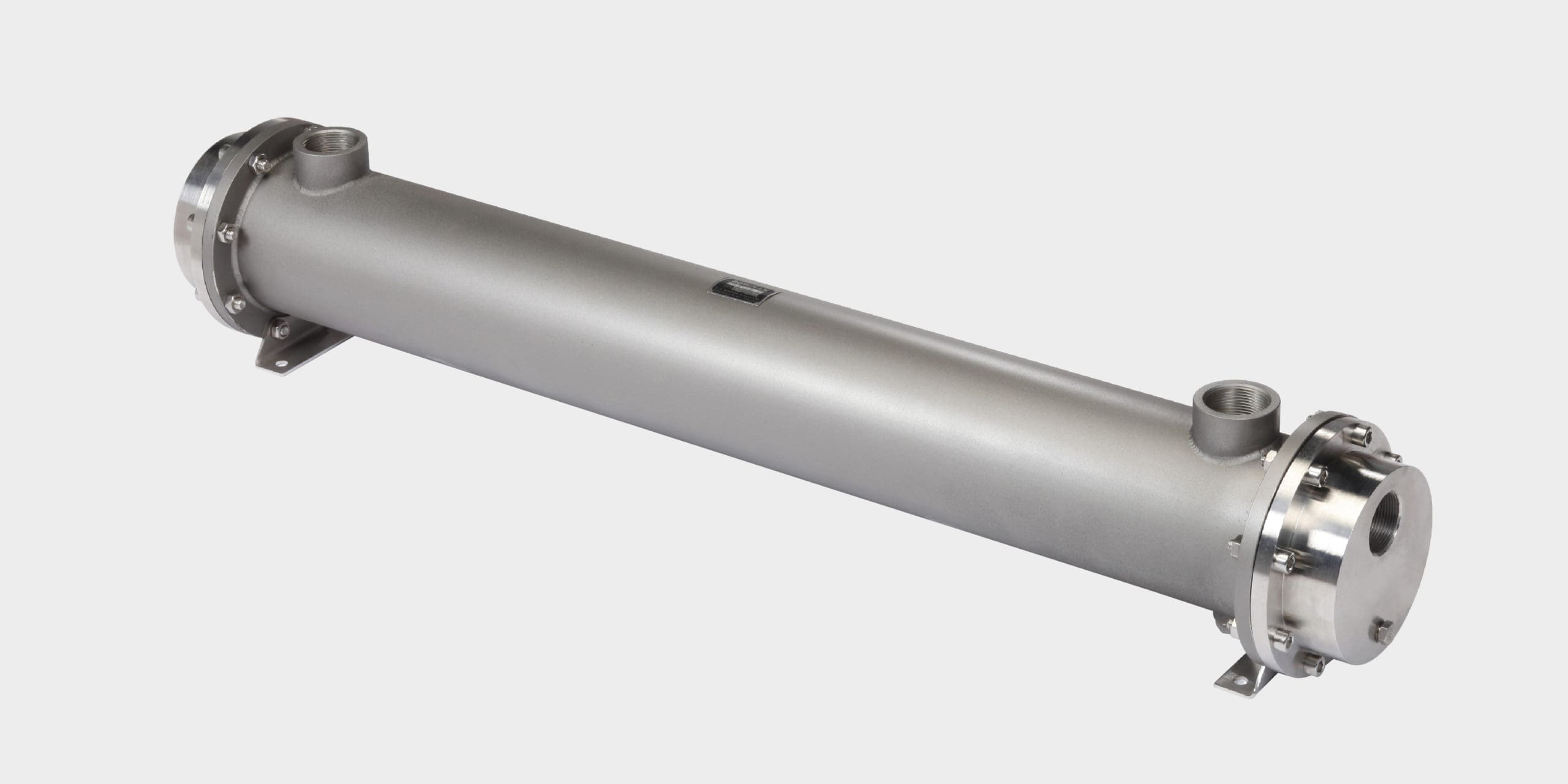
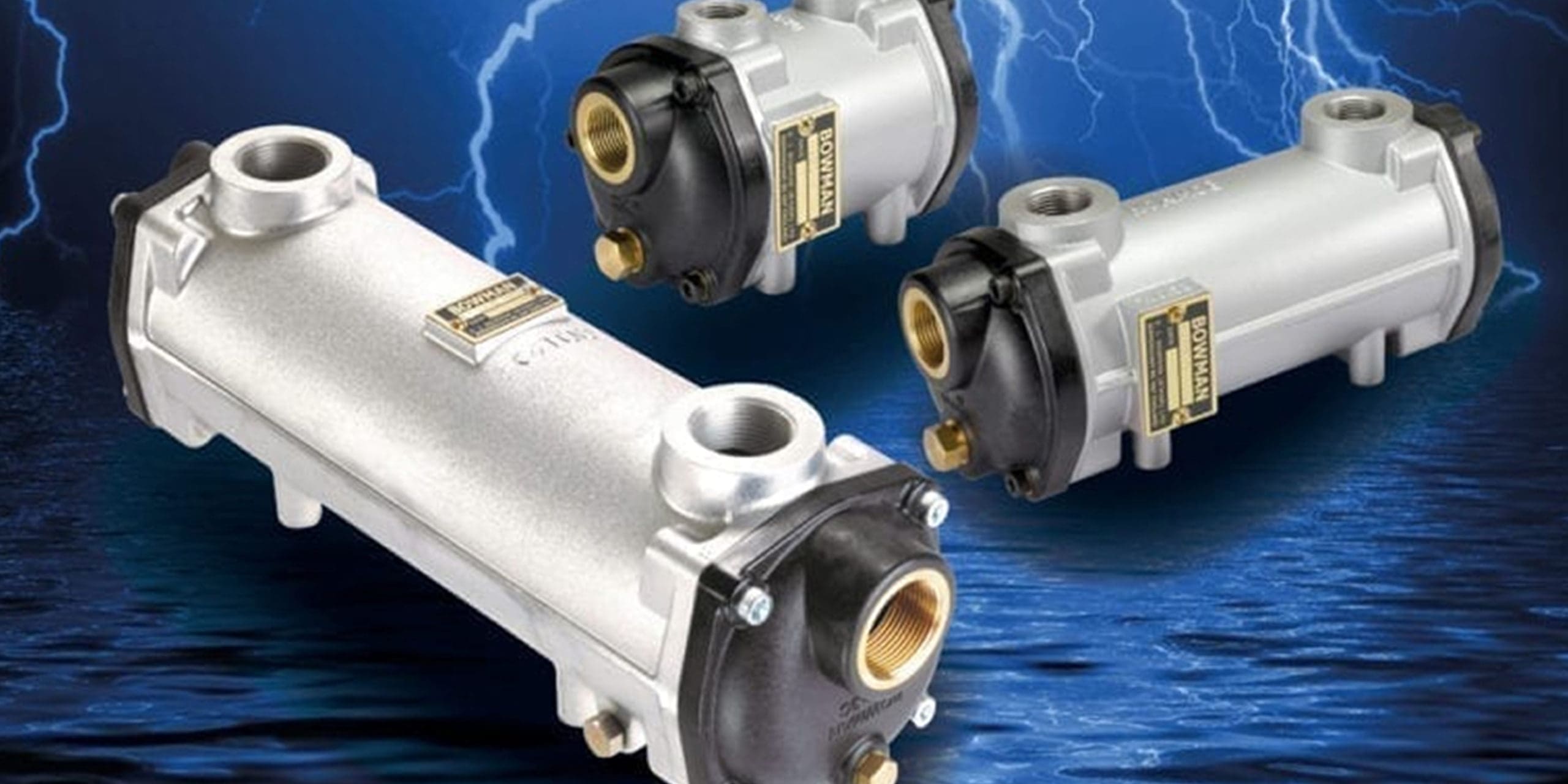
Many applications require stainless steel shell and tube heat exchangers and Bowman provide a standard range of units that are suitable for cooling or heating a variety of fluids.
Bowman swimming pool heat exchangers are renowned for reliability and efficiency. Whether heating your pool with a traditional boiler or a renewable energy source, Bowman is the obvious choice.
Premium quality heat exchangers and oil coolers for precise temperature control of engines under test cell development conditions.
Recovering waste heat energy from engine powered generating sets for biogas, diesel and natural gas applications up to 1 MW.
Efficient cooling for stationary / land-based engines where air cooling is either unavailable or inappropriate.
The reliable solution for cooling Electric & Hybrid Marine Propulsion Systems.
A comprehensive oil cooling solution for industrial hydraulic control systems, plus high temperature and mining applications.
A complete solution for cooling complex on-board hydraulic equipment, including thruster and stabiliser systems.
The complete cooling solution for marine engine propulsion, including the latest electric and hybrid systems.
An energy efficient solution for heating hot tubs and swim spas faster, significantly reducing heat-up time for guest change-over periods.
Quality heat exchangers for efficient swimming pool heating, using boiler or renewable energy heat sources.
Heat exchangers transfer heat from one fluid to another without allowing the two fluids to mix. They are used wherever a system needs to cool equipment, recover waste heat, heat water or control operating temperatures.
From marine engines and hydraulic machinery to swimming pools, hot tubs and CHP systems, heat exchangers play an important role in improving efficiency, protecting equipment and maintaining reliable performance.
This guide explains how heat exchangers work, the main types available and how to select the right solution for an application.
A heat exchanger is a device that transfers thermal energy between two separate fluids. In most applications, one fluid is hotter than the other. Heat moves from the hotter fluid, through a heat transfer surface, to the cooler fluid.
The fluids may be water, sea water, oil, fuel, glycol, air or another liquid used in the system. Although they exchange heat, they normally remain separated by a wall or series of tubes.
A simple example is a marine engine cooling system. Hot engine coolant passes through one side of the heat exchanger, while cooler sea water passes through the other. Heat transfers from the engine coolant to the sea water, helping keep the engine at a safe operating temperature.
Heat exchangers work through a process called heat transfer. The two fluids pass through separate channels, tubes or chambers. Because one fluid is hotter than the other, heat naturally moves across the metal surface separating them.
The rate of heat transfer depends on several factors:
A correctly selected unit must provide enough thermal performance for the required duty while keeping pressure loss within acceptable limits.
For example, a heat exchanger that is too small may not remove sufficient heat from the system. A unit that restricts flow too heavily may affect pump performance or reduce the efficiency of the wider cooling circuit.
Different heat exchanger designs are suited to different applications. The most appropriate option depends on the fluids involved, available space, required performance, operating pressure and corrosion risk.
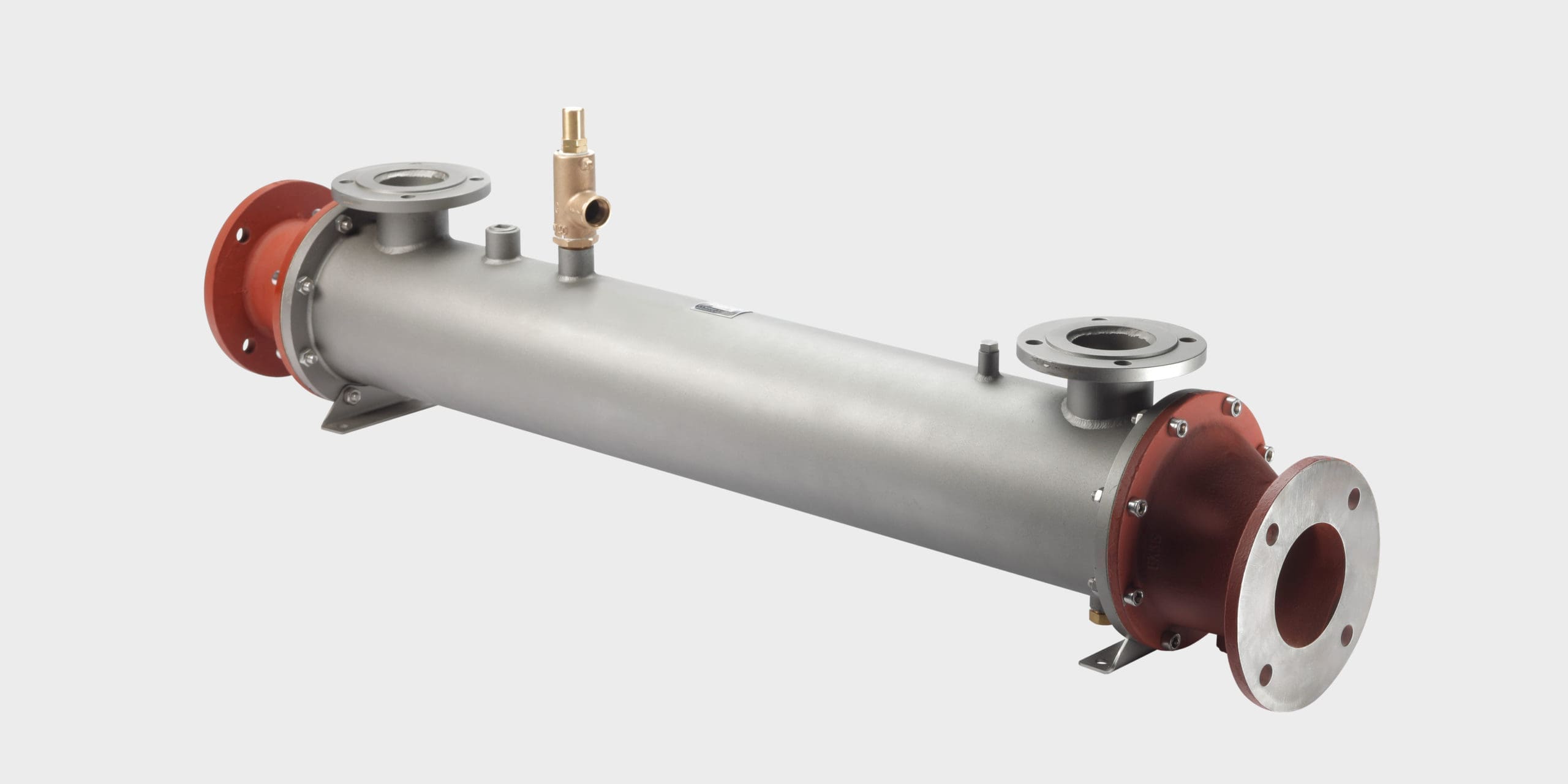
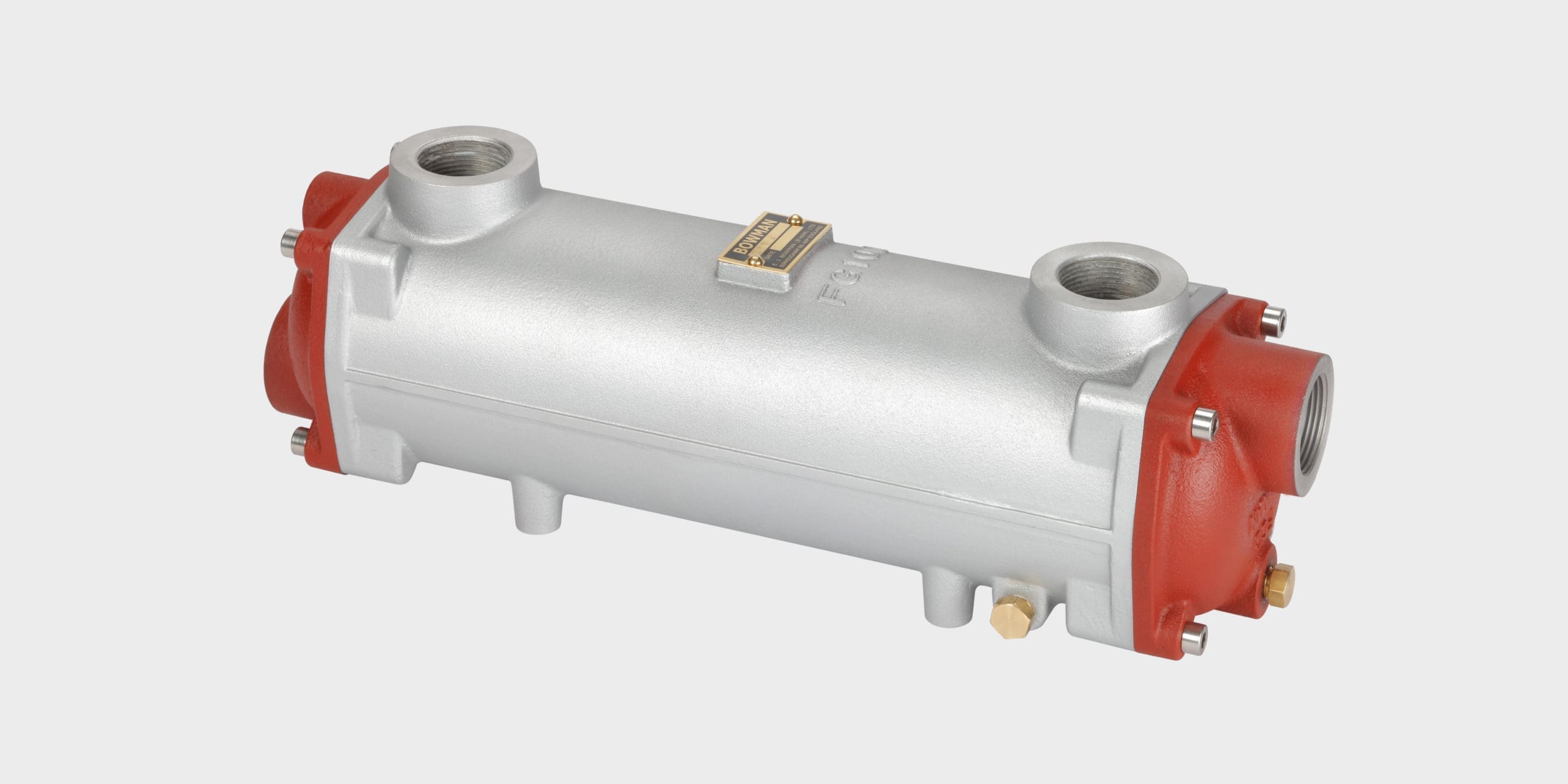
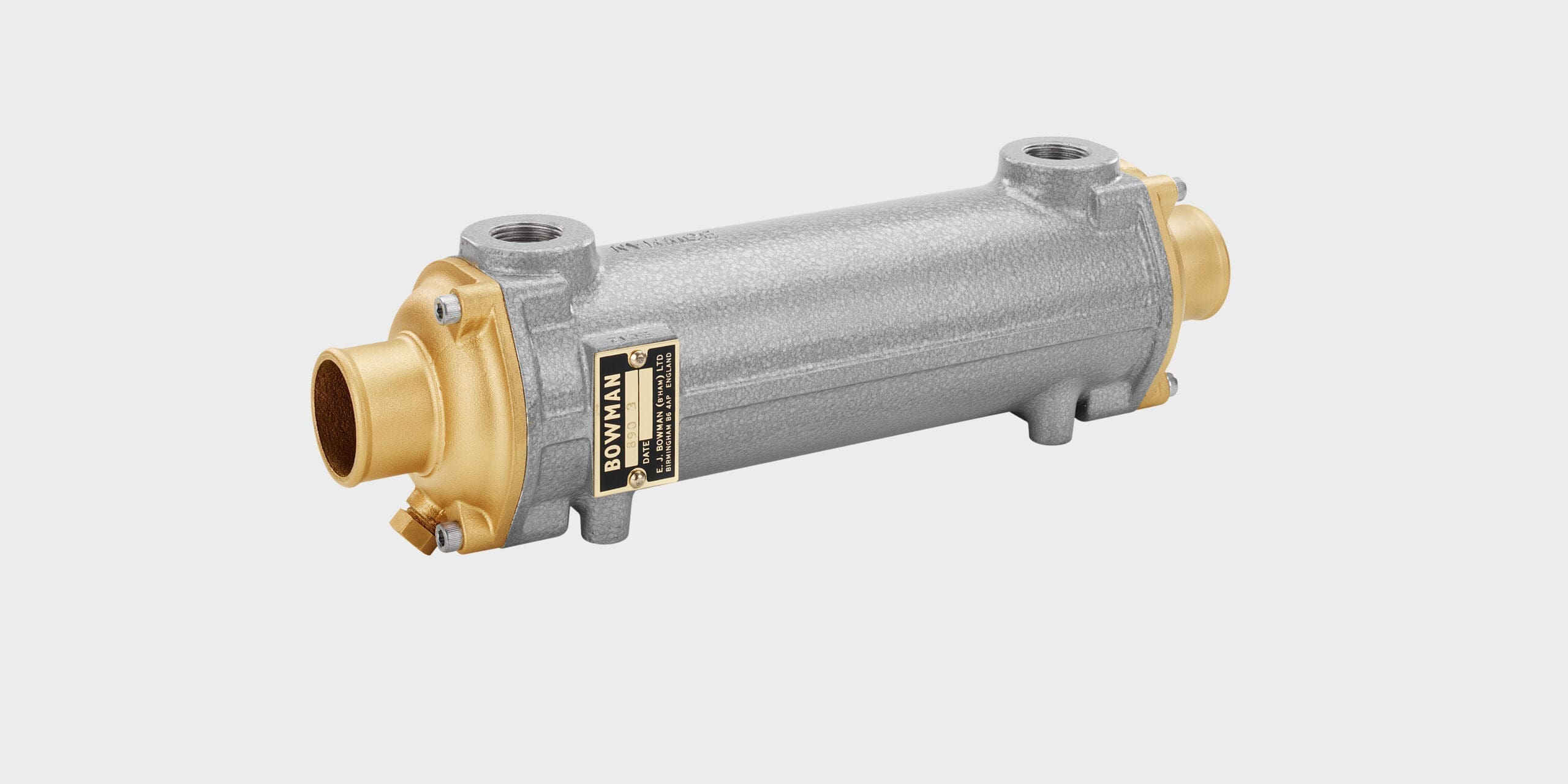
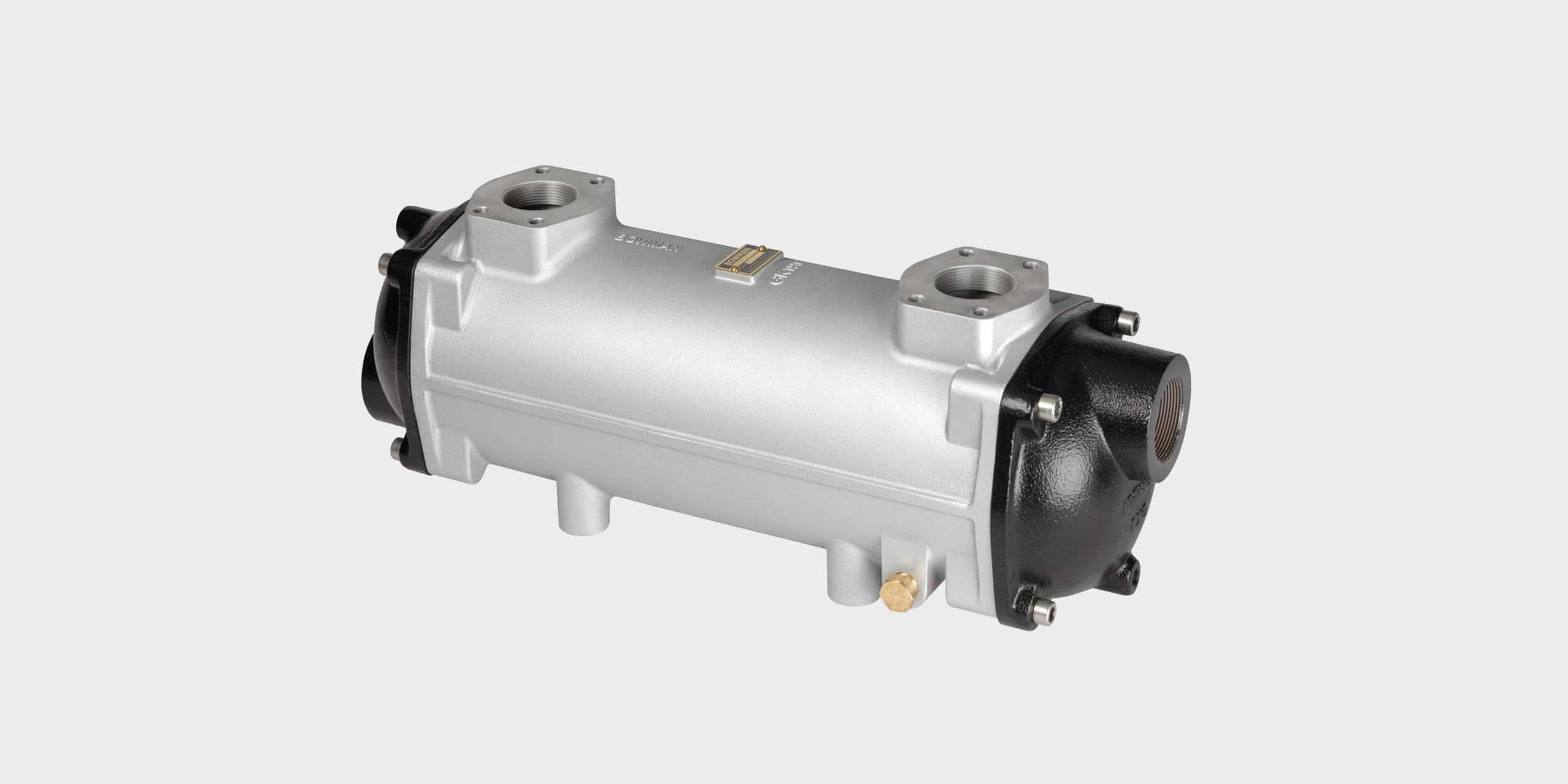
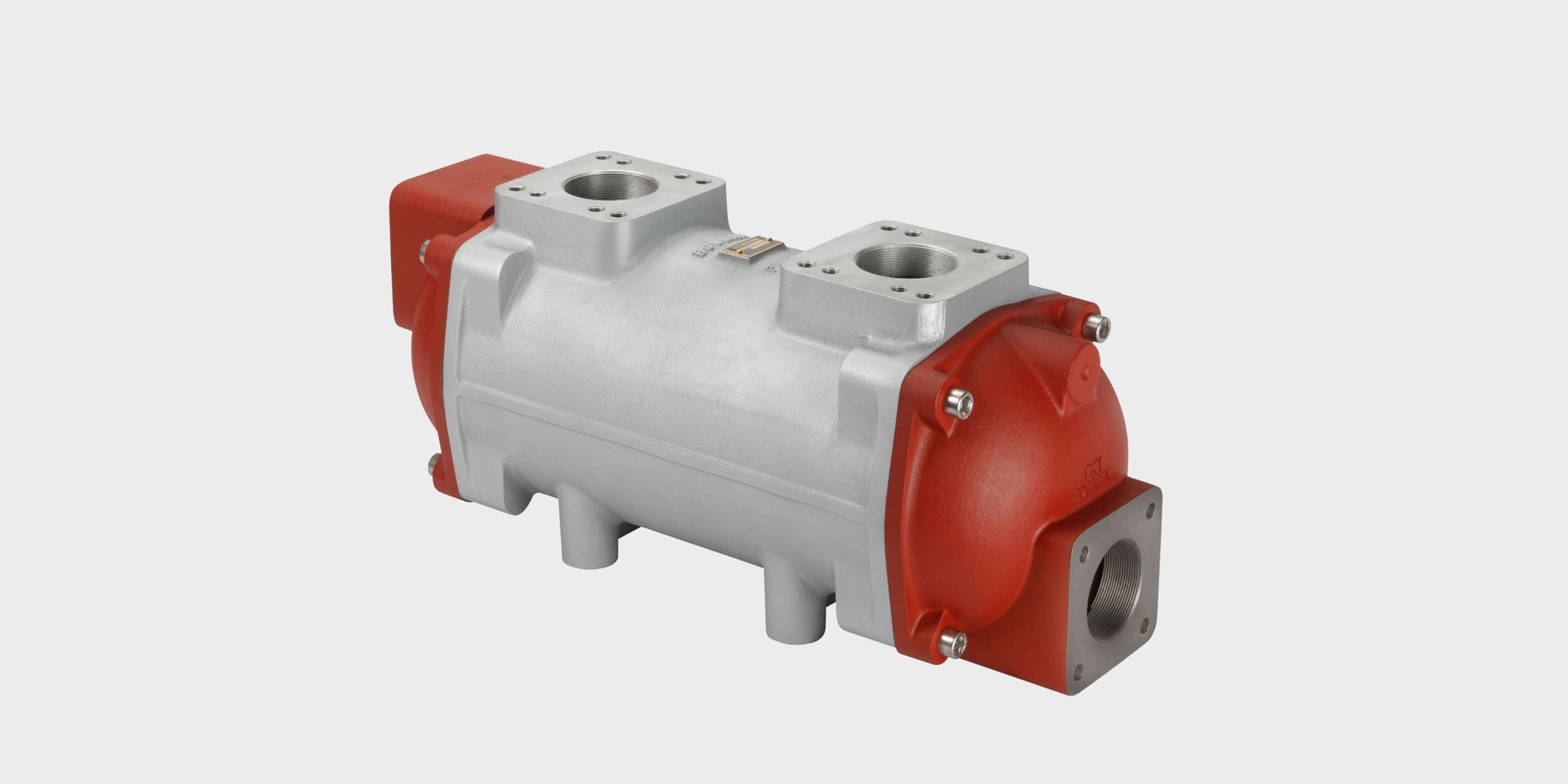
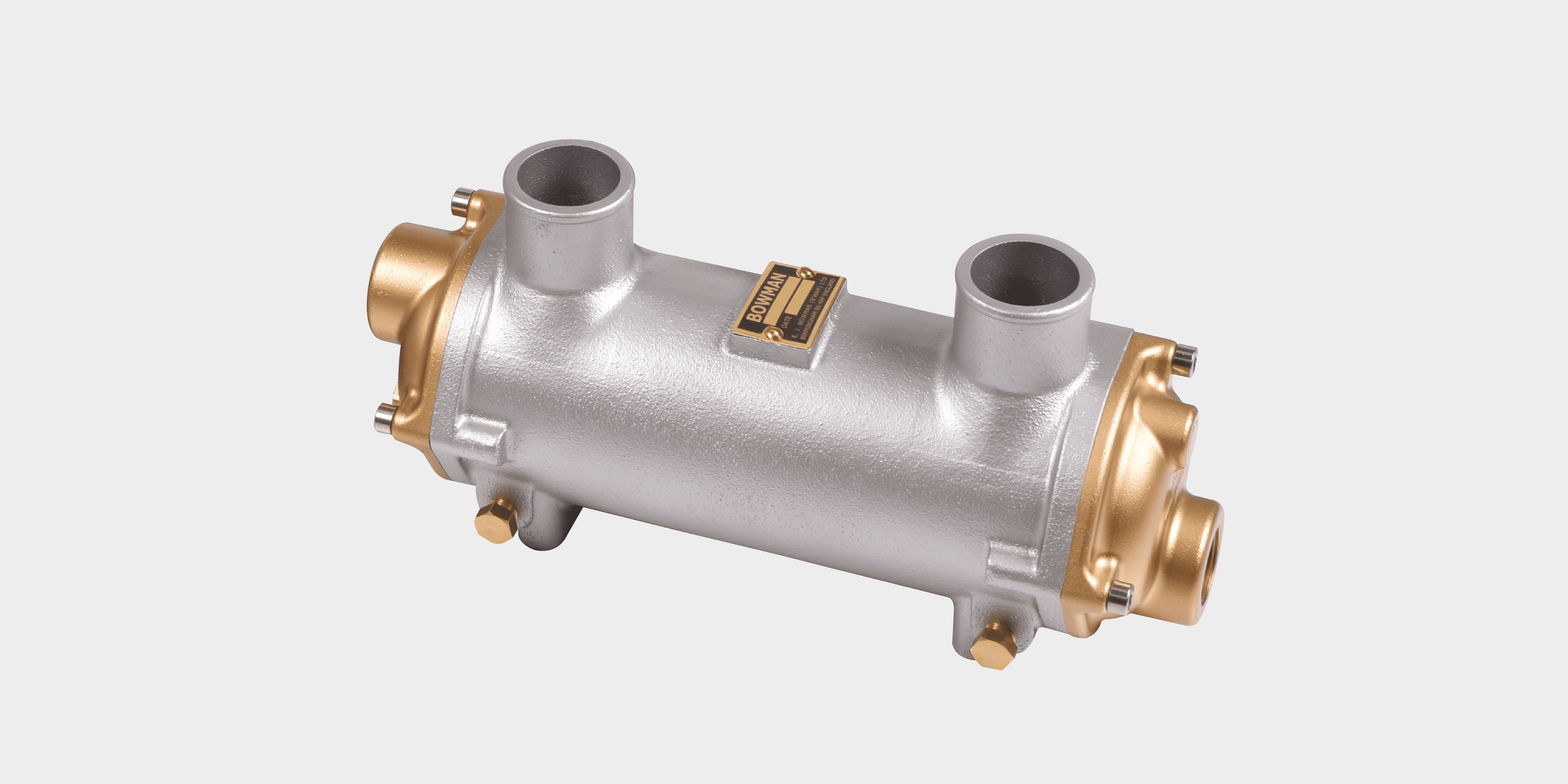
A shell and tube heat exchanger contains a bundle of tubes within an outer shell. One fluid flows through the tubes, while the other passes around the outside of the tube bundle within the shell.
This design is widely used because it can provide robust performance across many industrial, marine and oil cooling applications. Shell and tube heat exchangers can be suitable for cooling oil, fuel, engine coolant and other liquids, depending on the model and materials selected.
View shell and tube heat exchangers.
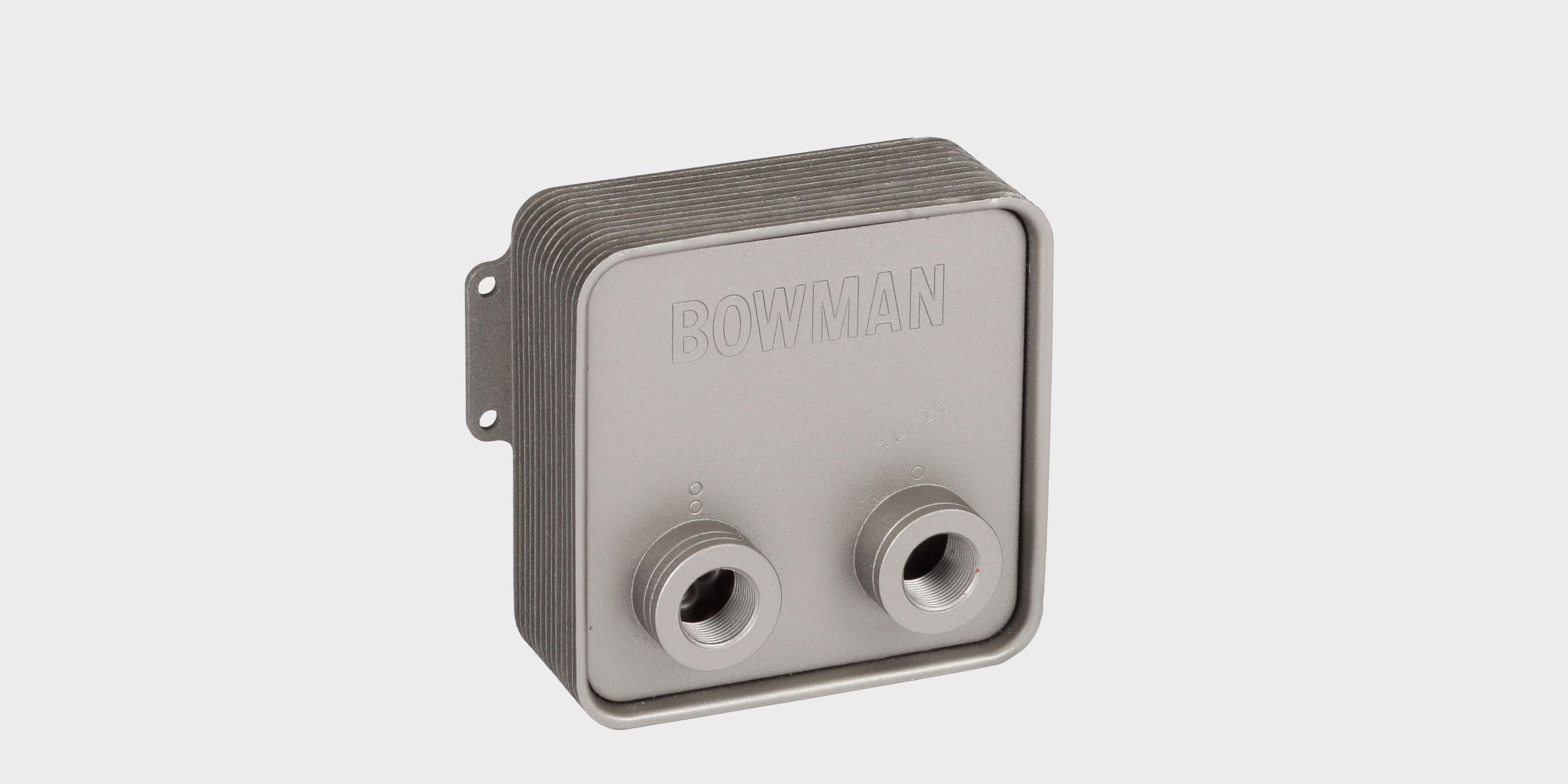
Plate heat exchangers use a series of closely spaced metal plates to transfer heat between fluids. Their compact design can provide efficient heat transfer where space is limited.
Inline plate designs may be used in applications where a compact unit and straightforward pipework integration are important.
View inline plate heat exchangers.
Oil coolers are heat exchangers designed to reduce the temperature of lubricating oil, hydraulic oil, transmission oil or other system oils.
Maintaining the correct oil temperature helps protect components, preserve lubricant performance and support dependable operation in demanding machinery. Oil coolers are commonly used in hydraulic power packs, industrial equipment, marine propulsion systems and mobile machinery.
View hydraulic oil coolers and marine transmission oil coolers.
Charge air coolers, often referred to as intercoolers, cool compressed intake air before it enters an engine. Cooling the air increases its density, which can support efficient combustion and help control engine operating temperatures.
They are used in marine, industrial and power generation engine systems.
View charge air coolers or read more about how an intercooler works.
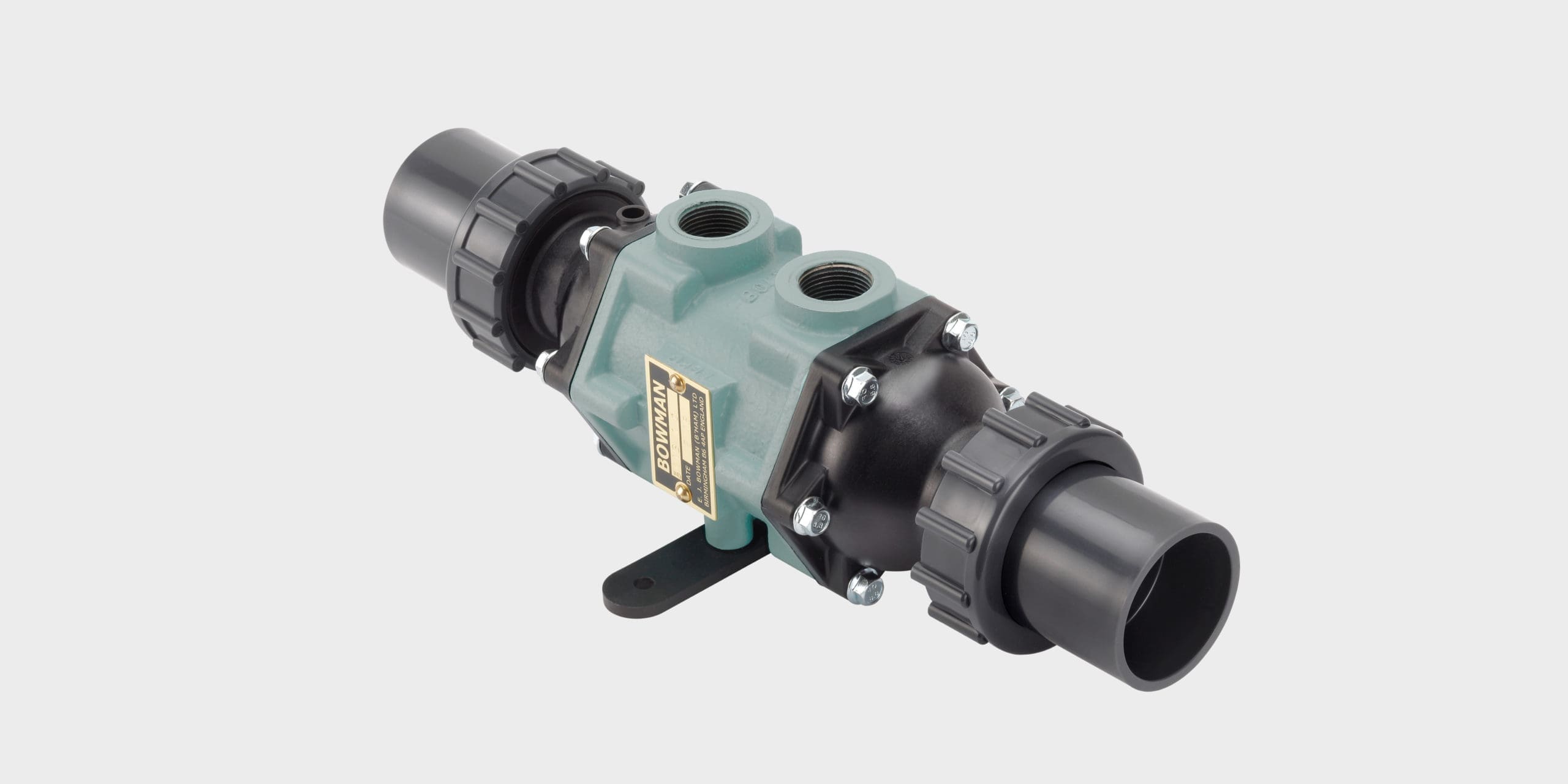
Pool and hot tub heat exchangers transfer heat from a boiler, heat pump or other heat source into the pool or spa water. The pool water remains separate from the primary heating circuit, allowing the system to heat water efficiently without mixing the two circuits.
The correct model and material should be selected according to the size of the pool or hot tub, heat source, water chemistry and target heating time.
View swimming pool heat exchangers and hot tub heat exchangers.
Heat exchangers are used across a broad range of domestic, commercial and industrial systems.
Marine engines, gearboxes and auxiliary equipment produce substantial heat during operation. Heat exchangers help maintain safe operating temperatures by transferring heat from engine coolant, transmission oil or charge air to sea water or a separate cooling circuit.
They are also used in electric and hybrid marine propulsion, where batteries, motors and power electronics may require effective thermal management.
Learn more in our guide to heat exchangers for electric or hybrid marine cooling.
Hydraulic systems generate heat as oil circulates through pumps, motors, valves and actuators. If oil temperatures become too high, performance and lubrication can be affected.
Hydraulic oil coolers remove excess heat and help keep machinery operating within its intended temperature range. They are widely used in manufacturing equipment, construction machinery, agricultural equipment and industrial power units.
In power generation and CHP applications, heat exchangers can recover useful energy from engine cooling circuits, exhaust systems or other processes. This heat can then be used for space heating, hot water or industrial processes.
By recovering heat that might otherwise be lost, a system can make better use of its available energy.
Find CHP and power generation applications.
Heat exchangers are a common method of heating swimming pools, spas and hot tubs. They can transfer heat from a boiler or alternative hot water source to the pool water quickly and efficiently when correctly sized.
For a full explanation, see how a swimming pool heat exchanger works.
Heat exchangers are manufactured using different materials depending on the intended fluid, operating conditions and corrosion risks.
Common considerations include:
Material selection should never be based on appearance or cost alone. The fluid type, water chemistry, temperature and operating environment should all be reviewed before selecting a heat exchanger.
Selecting the right heat exchanger begins with understanding the system requirements. Before choosing a model, collect as much of the following information as possible:
A supplier can use this information to identify a suitable heat exchanger type, size and material.
It is also important to consider future servicing. Heat transfer surfaces can become less effective if scale, debris, biological growth or contamination builds up over time. Accessible installation, suitable filtration and planned maintenance can all help preserve long-term performance.
Routine maintenance helps a heat exchanger continue to operate efficiently. The exact requirements depend on the model and application, but may include inspecting for leaks, checking flow rates, cleaning heat transfer surfaces and monitoring system temperatures.
Common warning signs of a potential issue include:
Investigating these signs early can help avoid more serious equipment issues or unexpected downtime.
Find the right heat exchanger for your application
Heat exchangers are used in countless systems because they provide an efficient way to transfer heat, protect equipment and recover useful energy. However, the right design depends on the specific application.
Whether you require a solution for marine cooling, hydraulic oil, CHP, pool heating or industrial equipment, explore our heat exchanger range to find the right product category for your system.

Nirvana Spa provides a relaxed Mediterranean holiday experience, with stunning swimming, spa and wellness pools heated by Bowman Heat Exchangers.

Six Bowman heat exchangers have been installed at the recently opened Gold’s Gym, Amman, Jordan, to heat two half Olympic-sized swimming pools.

How Bowman heat exchangers are helping this internationally renowned golf destination reduce energy costs and CO₂ emissions.

Bowman heat exchangers are playing an important role in the success of a flagship hotel on the Black Sea coast in Georgia.

Nirvana Spa provides a relaxed Mediterranean holiday experience, with stunning swimming, spa and wellness pools heated by Bowman Heat Exchangers.

Six Bowman heat exchangers have been installed at the recently opened Gold’s Gym, Amman, Jordan, to heat two half Olympic-sized swimming pools.

How Bowman heat exchangers are helping this internationally renowned golf destination reduce energy costs and CO₂ emissions.

Bowman heat exchangers are playing an important role in the success of a flagship hotel on the Black Sea coast in Georgia.
You cannot copy content of this page