• All Products

      • Charge Air Coolers
        • Charge Air Coolers

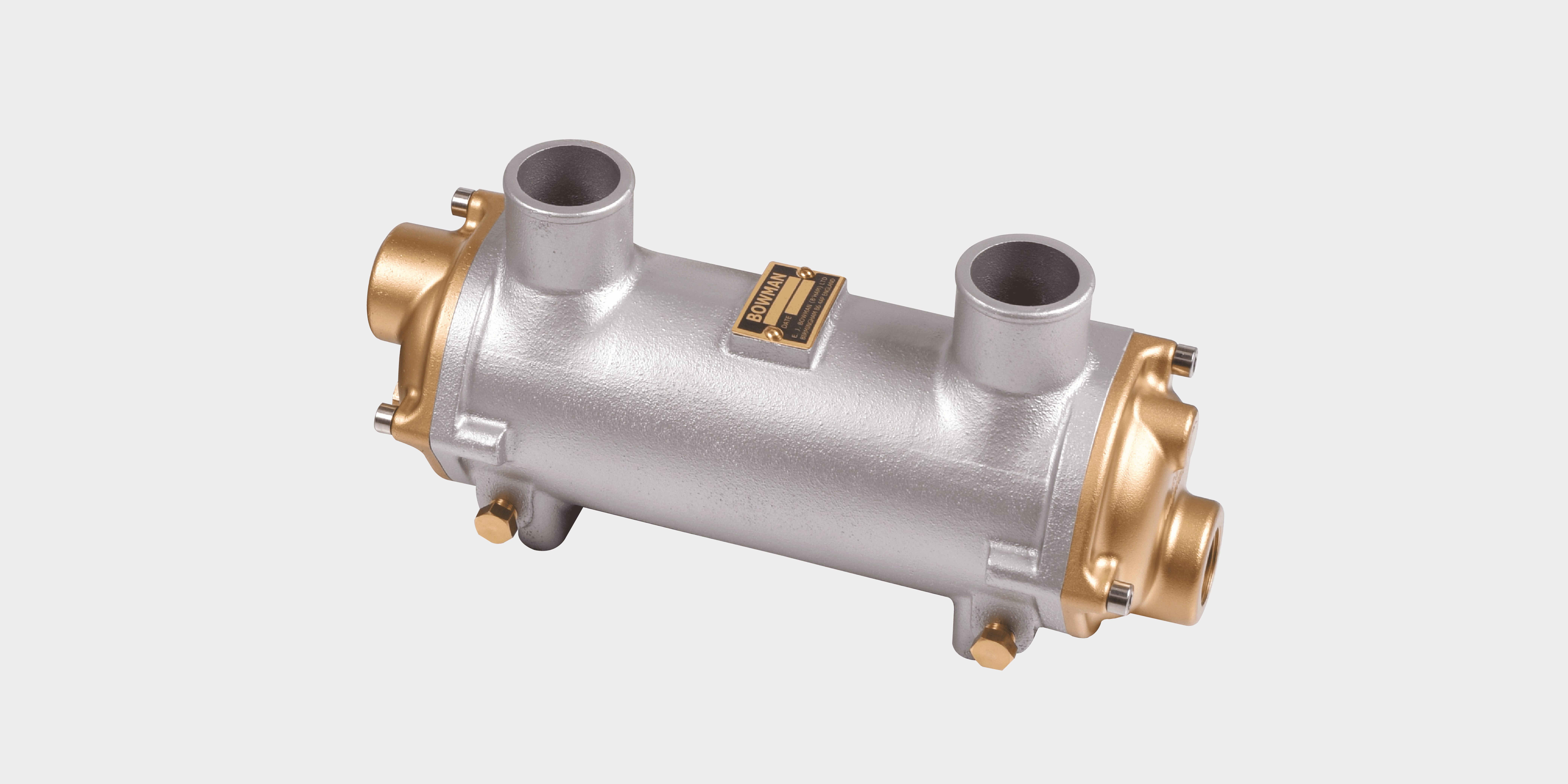
          Used to cool the hot, compressed air from the turbo before it reaches the engine, the intercoolers improve engine efficiency and reduce emissions for marine and land-based stationary engines.

      • Exhaust Gas Heat Exchangers
        • Exhaust Gas Heat Exchangers

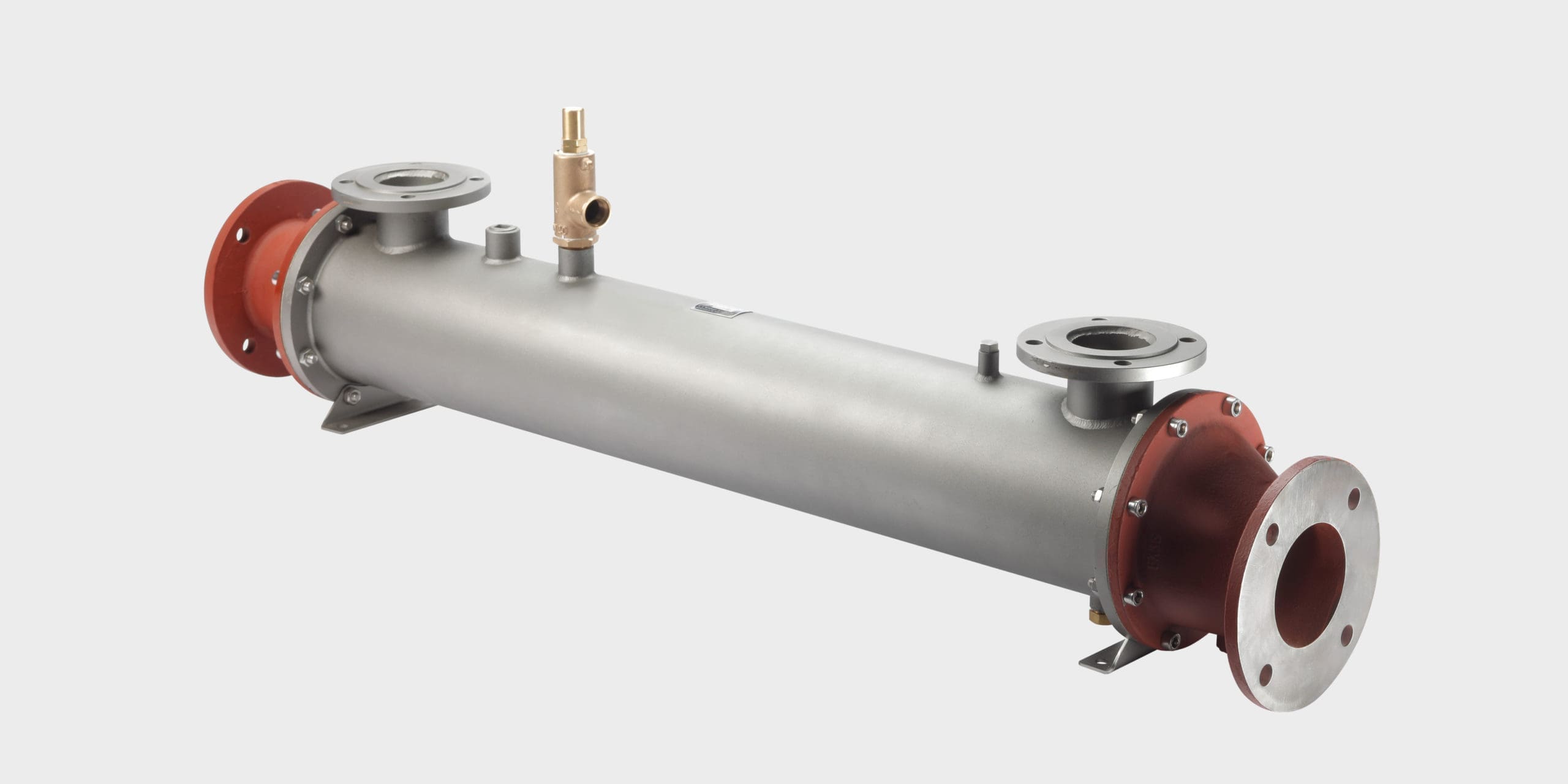
          Exhaust gas heat exchangers are designed to recover waste heat energy from the exhaust stream of reciprocating engine powered generating sets.

      • Fuel Coolers
        • Fuel Coolers

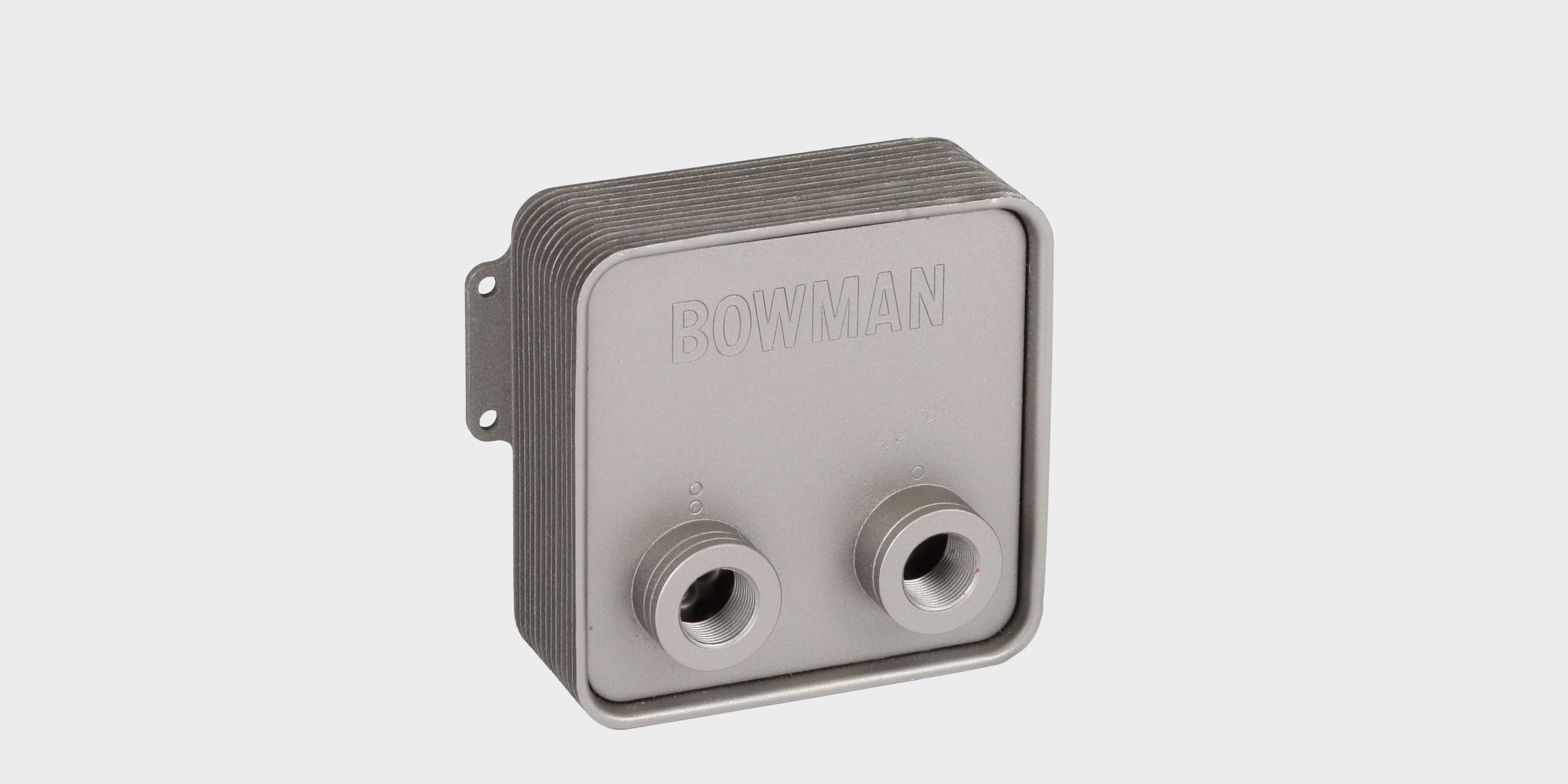
          Bowman 'copper free' fuel coolers are compact, highly efficient heat exchangers suitable for fuel conditioning rigs in the automotive testing industry.

      • Header Tank Heat Exchangers
        • Header Tank Heat Exchangers

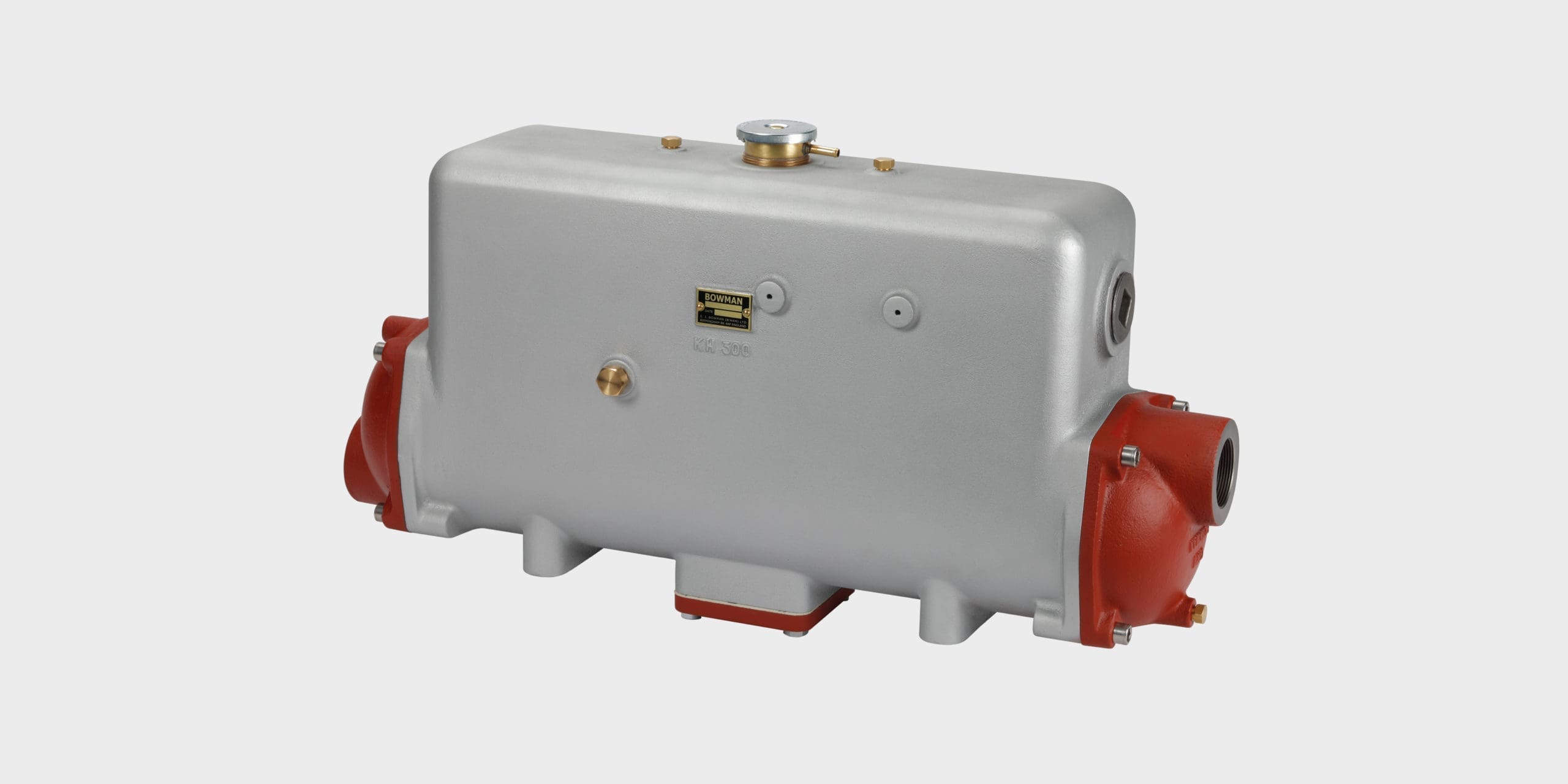
          Engine coolant header tank heat exchangers for marine propulsion, gensets or stationary land-based engines.

      • Hot Tub Heat Exchangers
        • Hot Tub Heat Exchangers

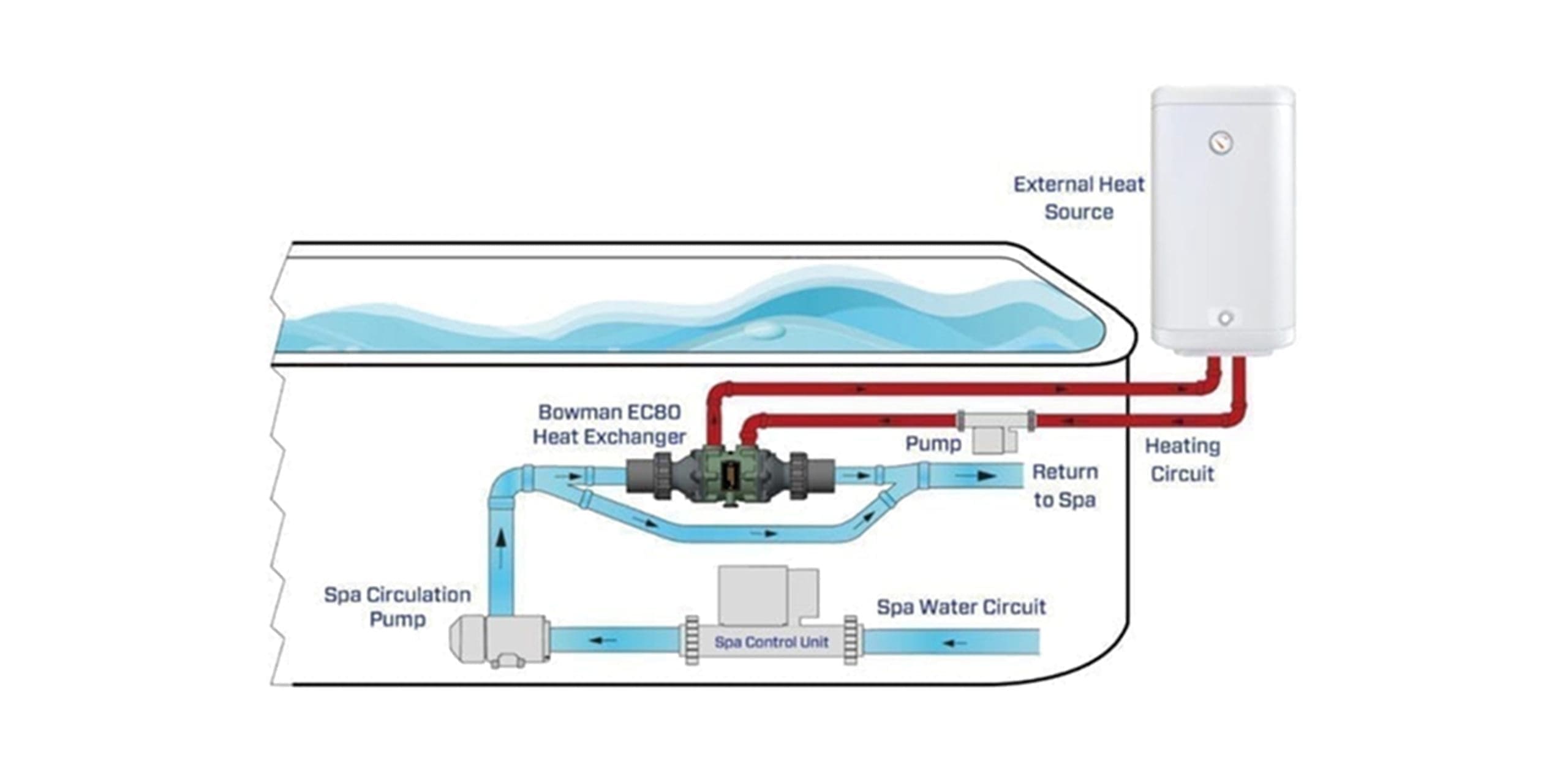
          Bowman EC 80-5113-1T heat exchangers provide a new solution for heating spas and hot tubs in just a fraction of the time taken by traditional electric heaters.

      • Hydraulic Oil Coolers
        • Hydraulic Oil Coolers

          Highly efficient heat transfer solutions for cooling marine, land-based and underground hydraulic systems.

      • Inline Plate Type Heat Exchangers
        • Inline Plate Type Heat Exchangers

          Bowman inline plate heat exchangers are a compact, economical solution for high efficiency heat transfer.

      • Marine Engine Coolers
        • Marine Engine Coolers

          Bespoke cooling solutions for a range of popular marine engines from major OEMs, including coolant heat exchangers, charge air coolers, plus combined heat exchangers and exhaust manifolds, suitable for cooling marine engines up to 1 MW.

      • Marine Transmission Oil Coolers
        • Marine Transmission Oil Coolers

          Bowman has a range of highly efficient oil coolers designed for marine and industrial engines and transmissions.

      • Electric and Hybrid Coolers
        • Electric and Hybrid Coolers

          Efficient heat exchangers for cooling electric marine motors, hydrogen fuel cells, battery packs, chargers, AC-DC converters, DC-DC converters, inverters and associated equipment for electric and hybrid marine propulsion and charging systems.

      • Shell and Tube Heat Exchangers
        • Shell and Tube Heat Exchangers

          Highly efficient heat transfer solutions for cooling a variety of applications where air and fluids need to be cooled by fluids.

      • Stainless Steel Heat Exchangers
        • Stainless Steel Heat Exchangers

          Many applications require stainless steel shell and tube heat exchangers and Bowman provide a standard range of units that are suitable for cooling or heating a variety of fluids.

      • Swimming Pool Heat Exchangers
        • Swimming Pool Heat Exchangers

          Bowman swimming pool heat exchangers are renowned for reliability and efficiency. Whether heating your pool with a traditional boiler or a renewable energy source, Bowman is the obvious choice.

    • All Applications

      • Automotive Testing
        • Automotive Testing

          Premium quality heat exchangers and oil coolers for precise temperature control of engines under test cell development conditions.

      • CHP / Co-Generation
        • CHP / Co-Generation

          Recovering waste heat energy from engine powered generating sets for biogas, diesel and natural gas applications up to 1 MW.

      • Engine Cooling Solutions
        • Engine Cooling Solutions

          Efficient cooling for stationary / land-based engines where air cooling is either unavailable or inappropriate.

      • Electric & Hybrid Marine
        • Electric & Hybrid Marine

          The reliable solution for cooling Electric & Hybrid Marine Propulsion Systems.

      • Industrial Hydraulics
        • Industrial Hydraulics

          A comprehensive oil cooling solution for industrial hydraulic control systems, plus high temperature and mining applications.

      • Marine Hydraulics
        • Marine Hydraulics

          A complete solution for cooling complex on-board hydraulic equipment, including thruster and stabiliser systems.

      • Marine Propulsion
        • Marine Propulsion

          The complete cooling solution for marine engine propulsion, including the latest electric and hybrid systems.

      • Hot Tubs / Spas
        • Hot Tubs / Spas

          An energy efficient solution for heating hot tubs and swim spas faster, significantly reducing heat-up time for guest change-over periods.

      • Swimming Pool
        • Swimming Pool

          Quality heat exchangers for efficient swimming pool heating, using boiler or renewable energy heat sources.

  • Distributors
  • News
  • Knowledge Centre
  • Downloads
  • About Us
  • Contact Us

Marine Gearbox Oil Coolers

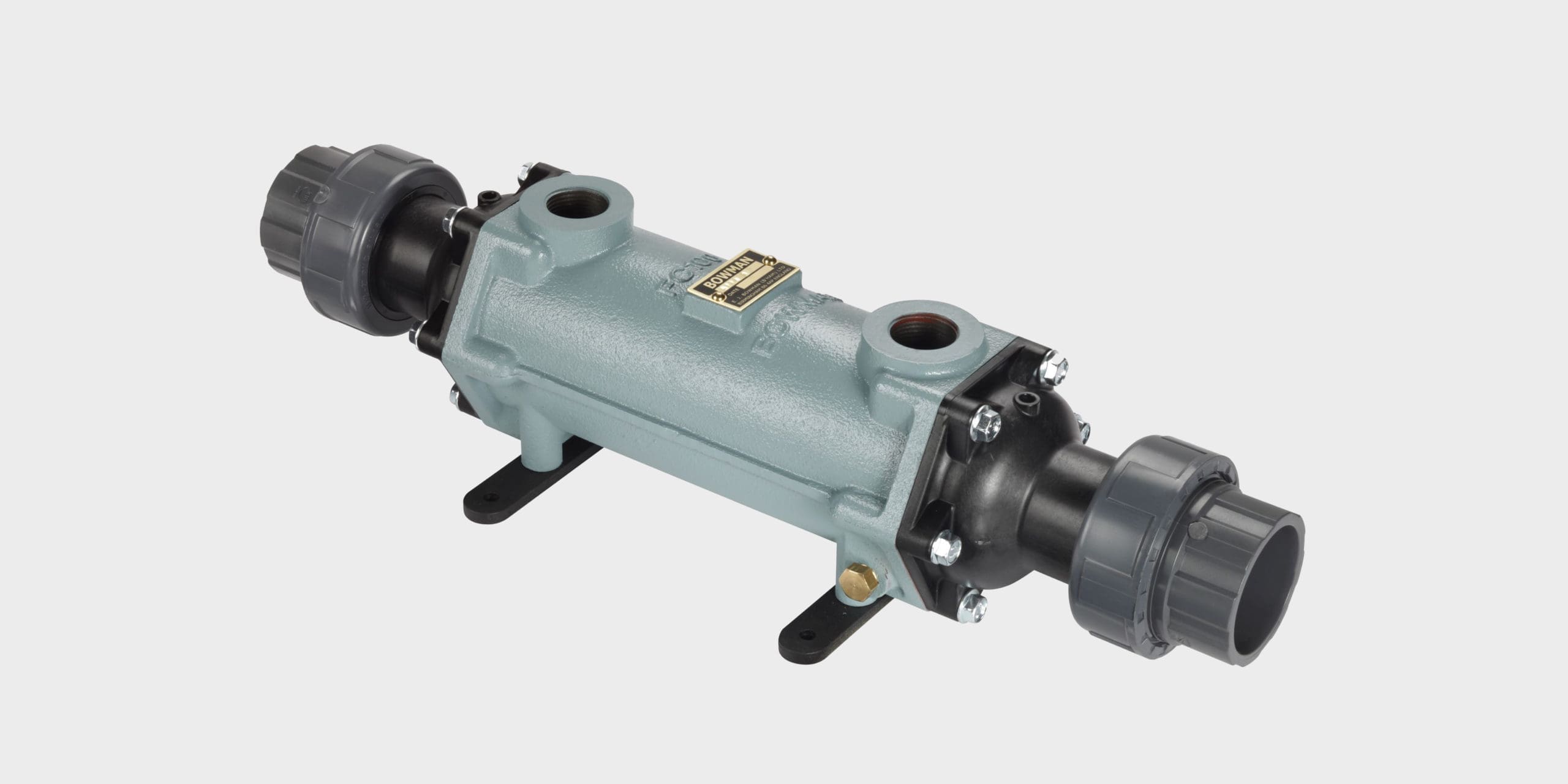
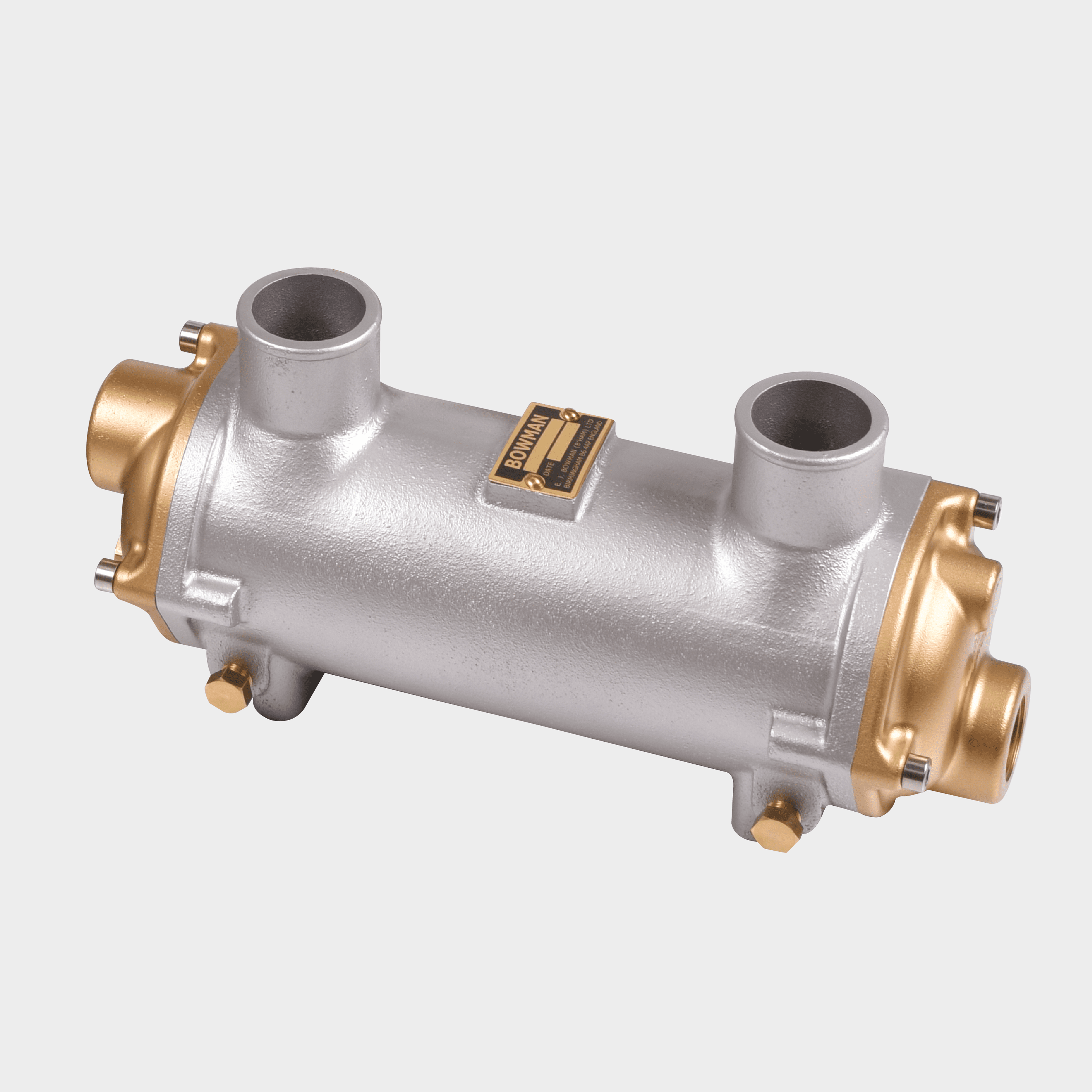
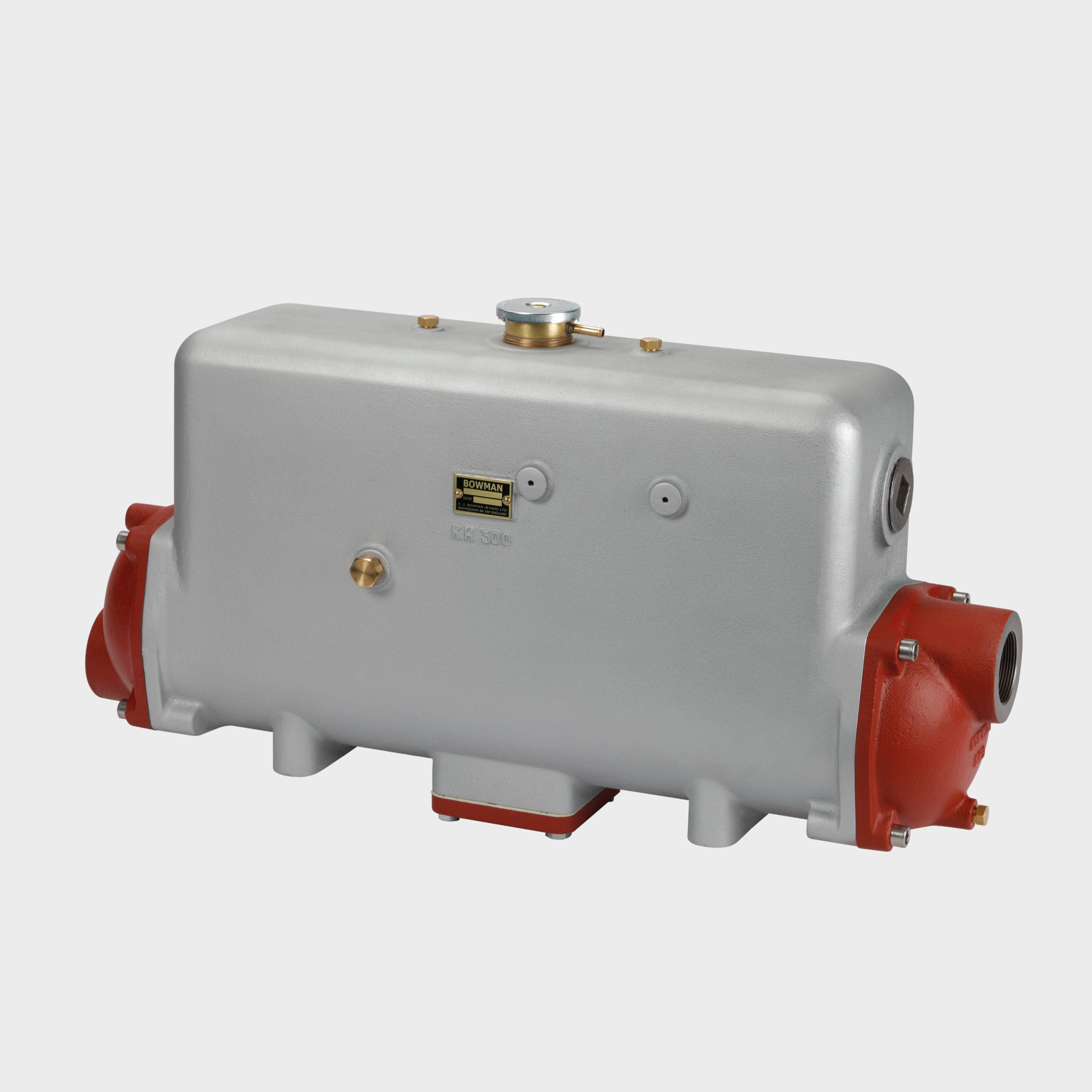
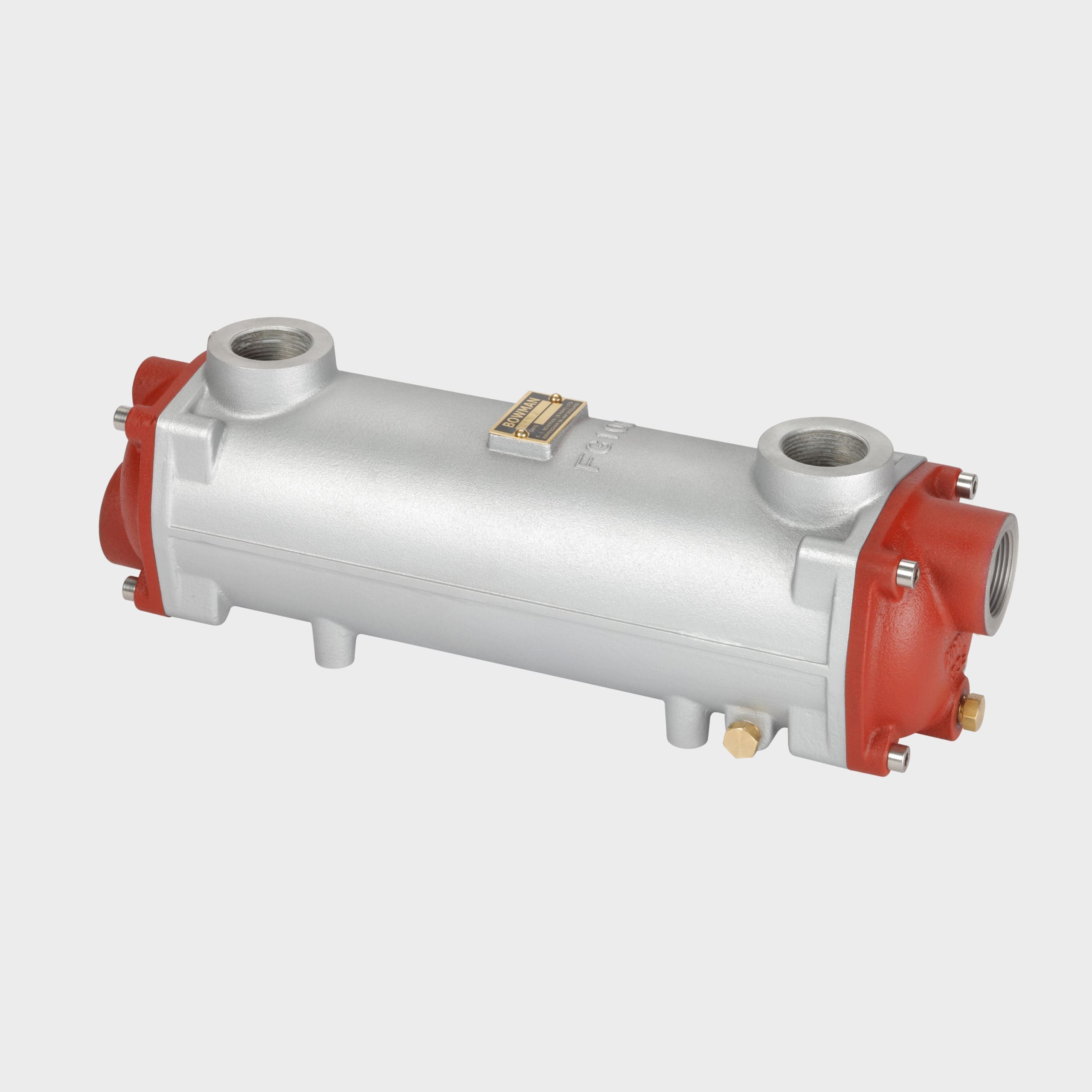
Bowman has a range of highly efficient oil coolers designed for marine and industrial engines and transmissions.

Marine Gearbox Oil Coolers

Bowman has a range of highly efficient oil coolers designed for marine and industrial engines and transmissions.
With engine efficiency constantly improving, the demand for more efficient oil cooling has never been greater. Bowman is a leading UK manufacturer of efficient, durable oil coolers for both industrial and marine engines and transmissions. Designed specifically for lubrication oil cooling, these high-quality units can be used with engines rated up to 8900 kW and are suitable for use with a range of cooling media, including sea water, fresh water or engine coolant.

Product Benefits

Compact design

Easily installed and integrated with the engine

Premium Quality

UK manufactured, using quality components

Easy Product Selection

Available quickly from our technical experts

Rapid Delivery

Extensive stockholding for fast response

Wide Range

Oil Coolers for engines rated from 20 kW to 8900 kW

High Performance

Models are available for up to 30 bar oil pressure

With engine efficiency constantly improving, the demand for more efficient oil cooling has never been greater. Bowman is a leading UK manufacturer of efficient, durable oil coolers for both industrial and marine engines and transmissions. Designed specifically for lubrication oil cooling, these high-quality units can be used with engines rated up to 8900 kW and are suitable for use with a range of cooling media, including sea water, fresh water or engine coolant.

Features

DC Coolers

DC Coolers

The DC oil cooler range is suitable for engines and transmissions rated up to 180 kW, with durable cupro-nickel tubes and a choice of neoprene seawater connection configurations.

30 Bar Pressure Rating

30 Bar Pressure Rating

Available with single pass connections the range of marine transmission oil coolers is suitable for cooling gearboxes with maximum rated pressures of up to 30 bar.

Hose Connections

Hose Connections

These single pass configuration marine oil coolers feature brass end covers with integral hose connectors for easy installation onto applications with oil pressure up to 20 bar.

Easy to Maintain

Easy to Maintain

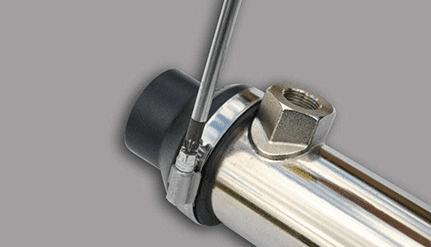
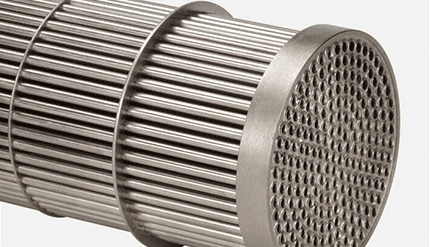
Simply by removing the end covers, the tube stack assembly can be withdrawn from the outer ‘shell’ for routine cleaning and maintenance procedures. A full range of replacement parts is also available.

Land Based Versions

Land Based Versions

Although originally designed for cooling marine transmissions with sea water, versions are also available for land-based transmission systems, where engine coolant is used for cooling.

Titanium Tube Stacks

Titanium Tube Stacks

Titanium tube stacks are available as an option in place of cupro-nickel. The titanium materials have a 10-year guarantee and can operate at higher flow rates, compared to standard tube stacks.

Specification

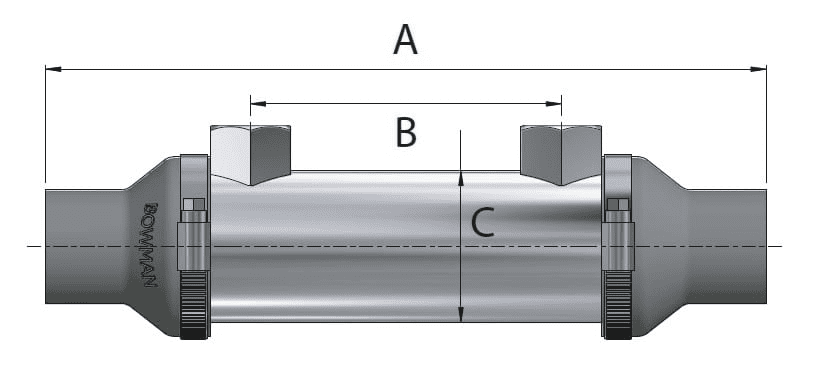
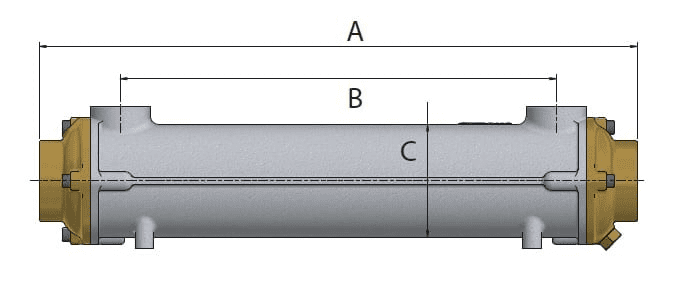
Marine Transmission Oil Coolers (rated to 30 bar) – Typical Performance and Dimensions

The following information offers a general guide to the performance and dimensions of our single pass marine oil cooler range. For more detailed information on additional configurations and industrial engine oil coolers, please download the product brochure or contact our sales team. Computer aided selection software (CAS) is available to accurately select the correct oil cooler specifically for your application.

Please contact us or your nearest stockist with the following information to receive a CAS selection:

  • Oil type (or viscosity at a specific temperature)
  • Oil flow rate
  • Required oil outlet temperature
  • Heat to be dissipated in kW
  • Cooling water temperature in °C

TypeHeat Dissipated from Gearbox (kW)Typical Engine Rating (kW)Typical Oil Flow Rate (l/m)Max Seawater Flow Rate (l/m)Dim. A (mm)Dim. B (mm)Dim. C (mm)Weight (kg)
DC06051201060240104510.9
DC09071501560314178511.1
DC12091801560396260511.4
View Table
Type:
DC060
Heat Dissipated from Gearbox (kW)
5
Typical Engine Rating (kW)
120
Typical Oil Flow Rate (l/m)
10
Max Seawater Flow Rate (l/m)
60
Dim. A (mm)
240
Dim. B (mm)
104
Dim. C (mm)
51
Weight (kg)
0.9
Type:
DC090
Heat Dissipated from Gearbox (kW)
7
Typical Engine Rating (kW)
150
Typical Oil Flow Rate (l/m)
15
Max Seawater Flow Rate (l/m)
60
Dim. A (mm)
314
Dim. B (mm)
178
Dim. C (mm)
51
Weight (kg)
1.1
Type:
DC120
Heat Dissipated from Gearbox (kW)
9
Typical Engine Rating (kW)
180
Typical Oil Flow Rate (l/m)
15
Max Seawater Flow Rate (l/m)
60
Dim. A (mm)
396
Dim. B (mm)
260
Dim. C (mm)
51
Weight (kg)
1.4

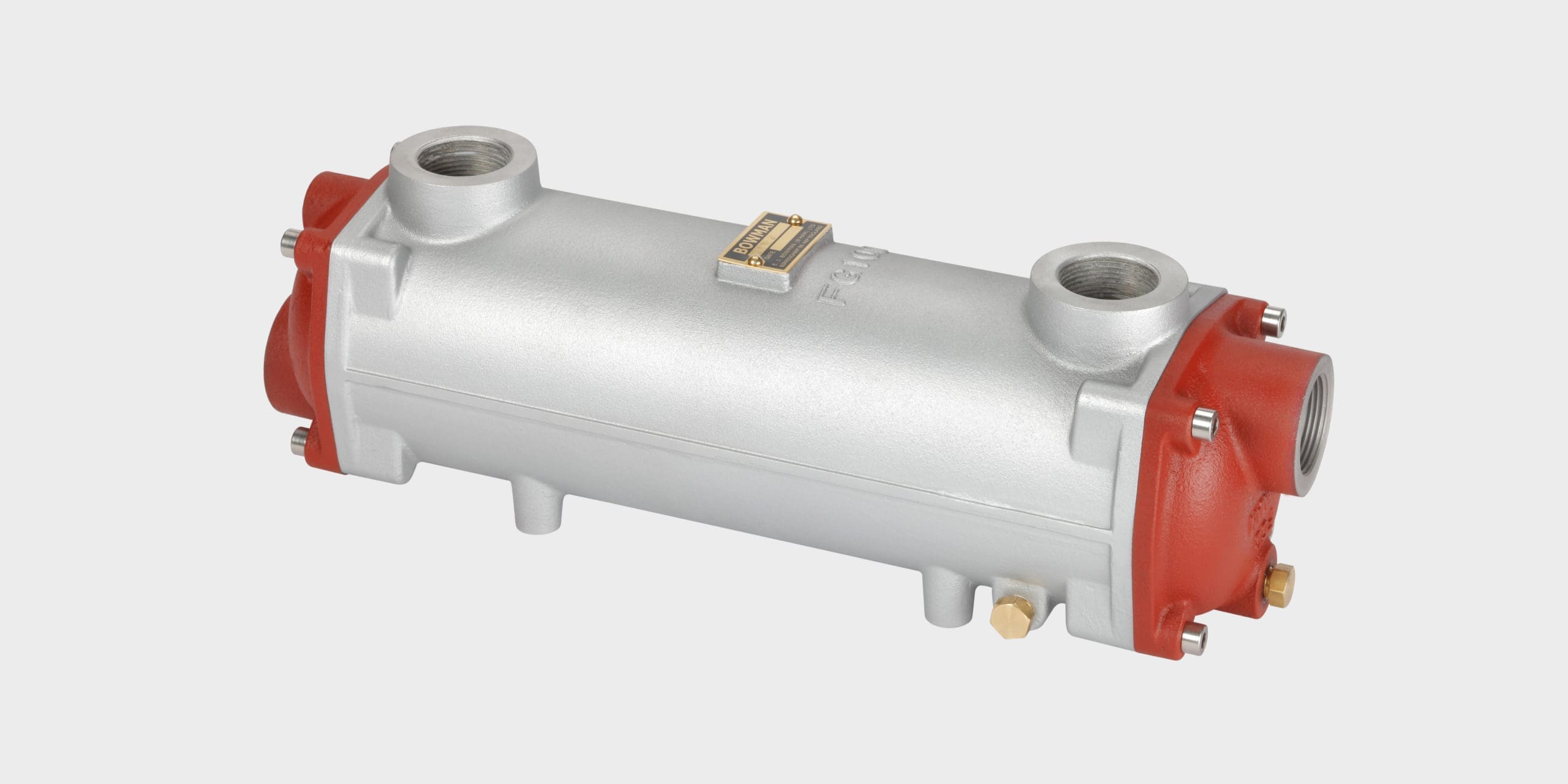
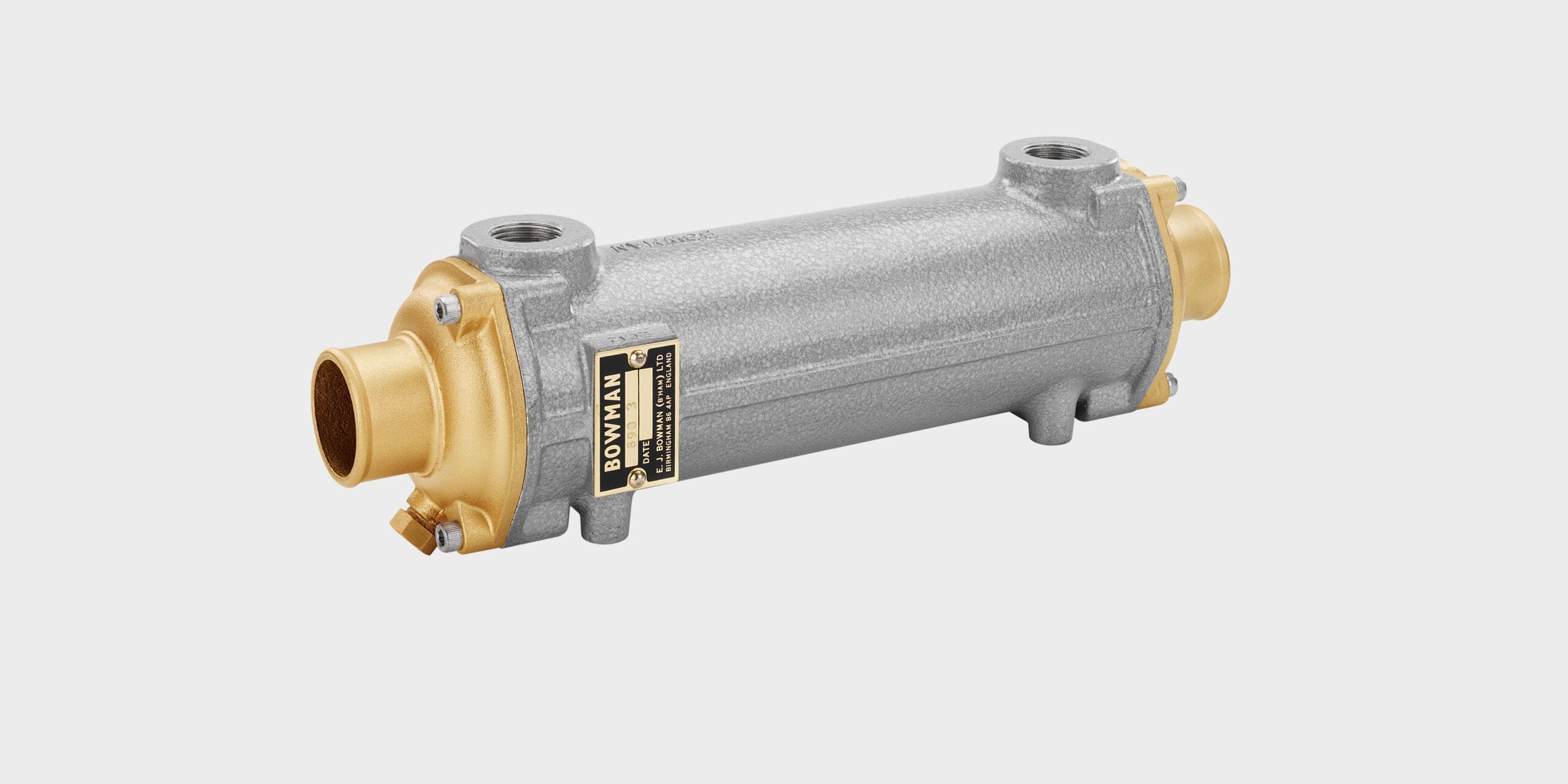
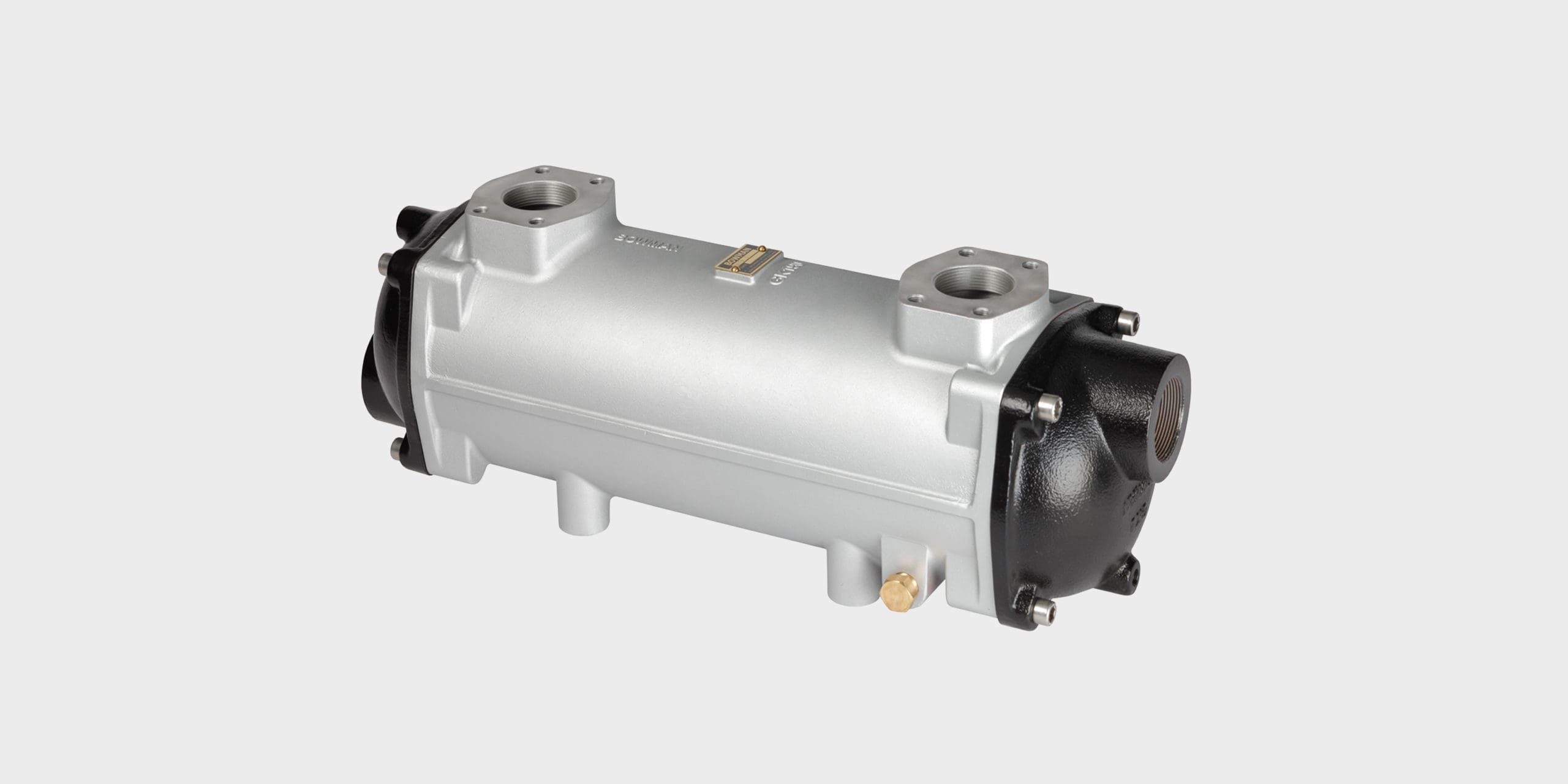
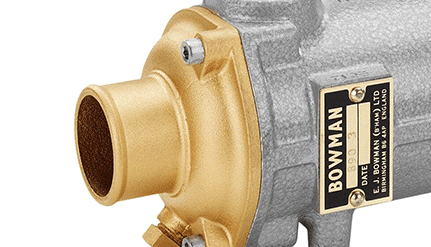
The image above is representative of the Marine Oil Cooler range from EC80 to PK600.

Note – Dimensions in the table below refer to standard single pass, seawater marine gearbox oil coolers. For more detailed drawings please download the brochure or contact us.

TypeHeat Dissipated from Gearbox (kW)Typical Engine Rating (kW)Typical Oil Flow Rate (l/m)Max Seawater Flow Rate (l/m)Dim. A (mm)Dim. B (mm)Dim. C (mm)Weight (kg)
EC1201224020180346226843.8
EC1401530020180444324844.8
EC1601836020180572452845.7
FC10019380402603582021086.3
FC12026520402604563001087.3
FC14032640402605844281089.4
FC160387604026073057410811.0
FG100336605037547229412810.0
FG120428405037560042212812.0
FG140489605037574656812814.5
FG1605511005037592474612817.5
GL1405010008064050227216218.0
GL1806212408064063040016221.0
GL2407214408064077654616225.0
GL3208216408064095472416230.0
GL40094188080640115692616236.0
GL4801012020806401360113016242.0
GK19082164010097567437019834.0
GK25097194010097582051619839.0
GK320111222010097599869419846.0
GK4001232460100975120089619854.0
GK48013226401009751404110019862.0
GK60014228401009751708140419874.0
JK1901282560200135070434023258.0
JK2501583160200135085048623266.0
JK32018737402001350102866423278.0
JK40021242402001350123086623292.0
JK4802344680200135014341070232105.0
JK6002555100200135017381374232126.0
PK1901913820350210075433027881.0
PK2502494980350210090047627894.0
PK320302604035021001078654278110.0
PK400350700035021001280856278125.0
PK4803917820350210014841060278140.0
PK6004458900350210017881364278158.0
View Table
Type:
EC120
Heat Dissipated from Gearbox (kW)
12
Typical Engine Rating (kW)
240
Typical Oil Flow Rate (l/m)
20
Max Seawater Flow Rate (l/m)
180
Dim. A (mm)
346
Dim. B (mm)
226
Dim. C (mm)
84
Weight (kg)
3.8
Type:
EC140
Heat Dissipated from Gearbox (kW)
15
Typical Engine Rating (kW)
300
Typical Oil Flow Rate (l/m)
20
Max Seawater Flow Rate (l/m)
180
Dim. A (mm)
444
Dim. B (mm)
324
Dim. C (mm)
84
Weight (kg)
4.8
Type:
EC160
Heat Dissipated from Gearbox (kW)
18
Typical Engine Rating (kW)
360
Typical Oil Flow Rate (l/m)
20
Max Seawater Flow Rate (l/m)
180
Dim. A (mm)
572
Dim. B (mm)
452
Dim. C (mm)
84
Weight (kg)
5.7
Type:
FC100
Heat Dissipated from Gearbox (kW)
19
Typical Engine Rating (kW)
380
Typical Oil Flow Rate (l/m)
40
Max Seawater Flow Rate (l/m)
260
Dim. A (mm)
358
Dim. B (mm)
202
Dim. C (mm)
108
Weight (kg)
6.3
Type:
FC120
Heat Dissipated from Gearbox (kW)
26
Typical Engine Rating (kW)
520
Typical Oil Flow Rate (l/m)
40
Max Seawater Flow Rate (l/m)
260
Dim. A (mm)
456
Dim. B (mm)
300
Dim. C (mm)
108
Weight (kg)
7.3
Type:
FC140
Heat Dissipated from Gearbox (kW)
32
Typical Engine Rating (kW)
640
Typical Oil Flow Rate (l/m)
40
Max Seawater Flow Rate (l/m)
260
Dim. A (mm)
584
Dim. B (mm)
428
Dim. C (mm)
108
Weight (kg)
9.4
Type:
FC160
Heat Dissipated from Gearbox (kW)
38
Typical Engine Rating (kW)
760
Typical Oil Flow Rate (l/m)
40
Max Seawater Flow Rate (l/m)
260
Dim. A (mm)
730
Dim. B (mm)
574
Dim. C (mm)
108
Weight (kg)
11.0
Type:
FG100
Heat Dissipated from Gearbox (kW)
33
Typical Engine Rating (kW)
660
Typical Oil Flow Rate (l/m)
50
Max Seawater Flow Rate (l/m)
375
Dim. A (mm)
472
Dim. B (mm)
294
Dim. C (mm)
128
Weight (kg)
10.0
Type:
FG120
Heat Dissipated from Gearbox (kW)
42
Typical Engine Rating (kW)
840
Typical Oil Flow Rate (l/m)
50
Max Seawater Flow Rate (l/m)
375
Dim. A (mm)
600
Dim. B (mm)
422
Dim. C (mm)
128
Weight (kg)
12.0
Type:
FG140
Heat Dissipated from Gearbox (kW)
48
Typical Engine Rating (kW)
960
Typical Oil Flow Rate (l/m)
50
Max Seawater Flow Rate (l/m)
375
Dim. A (mm)
746
Dim. B (mm)
568
Dim. C (mm)
128
Weight (kg)
14.5
Type:
FG160
Heat Dissipated from Gearbox (kW)
55
Typical Engine Rating (kW)
1100
Typical Oil Flow Rate (l/m)
50
Max Seawater Flow Rate (l/m)
375
Dim. A (mm)
924
Dim. B (mm)
746
Dim. C (mm)
128
Weight (kg)
17.5
Type:
GL140
Heat Dissipated from Gearbox (kW)
50
Typical Engine Rating (kW)
1000
Typical Oil Flow Rate (l/m)
80
Max Seawater Flow Rate (l/m)
640
Dim. A (mm)
502
Dim. B (mm)
272
Dim. C (mm)
162
Weight (kg)
18.0
Type:
GL180
Heat Dissipated from Gearbox (kW)
62
Typical Engine Rating (kW)
1240
Typical Oil Flow Rate (l/m)
80
Max Seawater Flow Rate (l/m)
640
Dim. A (mm)
630
Dim. B (mm)
400
Dim. C (mm)
162
Weight (kg)
21.0
Type:
GL240
Heat Dissipated from Gearbox (kW)
72
Typical Engine Rating (kW)
1440
Typical Oil Flow Rate (l/m)
80
Max Seawater Flow Rate (l/m)
640
Dim. A (mm)
776
Dim. B (mm)
546
Dim. C (mm)
162
Weight (kg)
25.0
Type:
GL320
Heat Dissipated from Gearbox (kW)
82
Typical Engine Rating (kW)
1640
Typical Oil Flow Rate (l/m)
80
Max Seawater Flow Rate (l/m)
640
Dim. A (mm)
954
Dim. B (mm)
724
Dim. C (mm)
162
Weight (kg)
30.0
Type:
GL400
Heat Dissipated from Gearbox (kW)
94
Typical Engine Rating (kW)
1880
Typical Oil Flow Rate (l/m)
80
Max Seawater Flow Rate (l/m)
640
Dim. A (mm)
1156
Dim. B (mm)
926
Dim. C (mm)
162
Weight (kg)
36.0
Type:
GL480
Heat Dissipated from Gearbox (kW)
101
Typical Engine Rating (kW)
2020
Typical Oil Flow Rate (l/m)
80
Max Seawater Flow Rate (l/m)
640
Dim. A (mm)
1360
Dim. B (mm)
1130
Dim. C (mm)
162
Weight (kg)
42.0
Type:
GK190
Heat Dissipated from Gearbox (kW)
82
Typical Engine Rating (kW)
1640
Typical Oil Flow Rate (l/m)
100
Max Seawater Flow Rate (l/m)
975
Dim. A (mm)
674
Dim. B (mm)
370
Dim. C (mm)
198
Weight (kg)
34.0
Type:
GK250
Heat Dissipated from Gearbox (kW)
97
Typical Engine Rating (kW)
1940
Typical Oil Flow Rate (l/m)
100
Max Seawater Flow Rate (l/m)
975
Dim. A (mm)
820
Dim. B (mm)
516
Dim. C (mm)
198
Weight (kg)
39.0
Type:
GK320
Heat Dissipated from Gearbox (kW)
111
Typical Engine Rating (kW)
2220
Typical Oil Flow Rate (l/m)
100
Max Seawater Flow Rate (l/m)
975
Dim. A (mm)
998
Dim. B (mm)
694
Dim. C (mm)
198
Weight (kg)
46.0
Type:
GK400
Heat Dissipated from Gearbox (kW)
123
Typical Engine Rating (kW)
2460
Typical Oil Flow Rate (l/m)
100
Max Seawater Flow Rate (l/m)
975
Dim. A (mm)
1200
Dim. B (mm)
896
Dim. C (mm)
198
Weight (kg)
54.0
Type:
GK480
Heat Dissipated from Gearbox (kW)
132
Typical Engine Rating (kW)
2640
Typical Oil Flow Rate (l/m)
100
Max Seawater Flow Rate (l/m)
975
Dim. A (mm)
1404
Dim. B (mm)
1100
Dim. C (mm)
198
Weight (kg)
62.0
Type:
GK600
Heat Dissipated from Gearbox (kW)
142
Typical Engine Rating (kW)
2840
Typical Oil Flow Rate (l/m)
100
Max Seawater Flow Rate (l/m)
975
Dim. A (mm)
1708
Dim. B (mm)
1404
Dim. C (mm)
198
Weight (kg)
74.0
Type:
JK190
Heat Dissipated from Gearbox (kW)
128
Typical Engine Rating (kW)
2560
Typical Oil Flow Rate (l/m)
200
Max Seawater Flow Rate (l/m)
1350
Dim. A (mm)
704
Dim. B (mm)
340
Dim. C (mm)
232
Weight (kg)
58.0
Type:
JK250
Heat Dissipated from Gearbox (kW)
158
Typical Engine Rating (kW)
3160
Typical Oil Flow Rate (l/m)
200
Max Seawater Flow Rate (l/m)
1350
Dim. A (mm)
850
Dim. B (mm)
486
Dim. C (mm)
232
Weight (kg)
66.0
Type:
JK320
Heat Dissipated from Gearbox (kW)
187
Typical Engine Rating (kW)
3740
Typical Oil Flow Rate (l/m)
200
Max Seawater Flow Rate (l/m)
1350
Dim. A (mm)
1028
Dim. B (mm)
664
Dim. C (mm)
232
Weight (kg)
78.0
Type:
JK400
Heat Dissipated from Gearbox (kW)
212
Typical Engine Rating (kW)
4240
Typical Oil Flow Rate (l/m)
200
Max Seawater Flow Rate (l/m)
1350
Dim. A (mm)
1230
Dim. B (mm)
866
Dim. C (mm)
232
Weight (kg)
92.0
Type:
JK480
Heat Dissipated from Gearbox (kW)
234
Typical Engine Rating (kW)
4680
Typical Oil Flow Rate (l/m)
200
Max Seawater Flow Rate (l/m)
1350
Dim. A (mm)
1434
Dim. B (mm)
1070
Dim. C (mm)
232
Weight (kg)
105.0
Type:
JK600
Heat Dissipated from Gearbox (kW)
255
Typical Engine Rating (kW)
5100
Typical Oil Flow Rate (l/m)
200
Max Seawater Flow Rate (l/m)
1350
Dim. A (mm)
1738
Dim. B (mm)
1374
Dim. C (mm)
232
Weight (kg)
126.0
Type:
PK190
Heat Dissipated from Gearbox (kW)
191
Typical Engine Rating (kW)
3820
Typical Oil Flow Rate (l/m)
350
Max Seawater Flow Rate (l/m)
2100
Dim. A (mm)
754
Dim. B (mm)
330
Dim. C (mm)
278
Weight (kg)
81.0
Type:
PK250
Heat Dissipated from Gearbox (kW)
249
Typical Engine Rating (kW)
4980
Typical Oil Flow Rate (l/m)
350
Max Seawater Flow Rate (l/m)
2100
Dim. A (mm)
900
Dim. B (mm)
476
Dim. C (mm)
278
Weight (kg)
94.0
Type:
PK320
Heat Dissipated from Gearbox (kW)
302
Typical Engine Rating (kW)
6040
Typical Oil Flow Rate (l/m)
350
Max Seawater Flow Rate (l/m)
2100
Dim. A (mm)
1078
Dim. B (mm)
654
Dim. C (mm)
278
Weight (kg)
110.0
Type:
PK400
Heat Dissipated from Gearbox (kW)
350
Typical Engine Rating (kW)
7000
Typical Oil Flow Rate (l/m)
350
Max Seawater Flow Rate (l/m)
2100
Dim. A (mm)
1280
Dim. B (mm)
856
Dim. C (mm)
278
Weight (kg)
125.0
Type:
PK480
Heat Dissipated from Gearbox (kW)
391
Typical Engine Rating (kW)
7820
Typical Oil Flow Rate (l/m)
350
Max Seawater Flow Rate (l/m)
2100
Dim. A (mm)
1484
Dim. B (mm)
1060
Dim. C (mm)
278
Weight (kg)
140.0
Type:
PK600
Heat Dissipated from Gearbox (kW)
445
Typical Engine Rating (kW)
8900
Typical Oil Flow Rate (l/m)
350
Max Seawater Flow Rate (l/m)
2100
Dim. A (mm)
1788
Dim. B (mm)
1364
Dim. C (mm)
278
Weight (kg)
158.0

Swimming Pool Boiler Range – Typical Performance and Dimensions

The table below enables the selection of the most appropriate heat exchanger for your swimming pool or spa. The information shows the amount of heat that can be transferred from either boiler or renewable energy sources, together with the basic dimensions of each unit.  Typical pool sizes are also shown as a guide. For further information please download the product brochure, contact us or your nearest stockist.

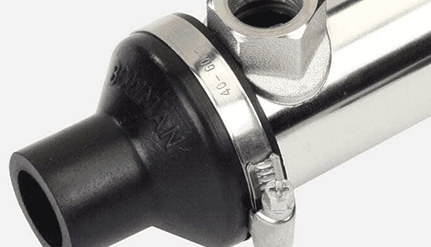
The image above is representative of swimming pool heat exchangers for boilers rated from 12 – 100 kW.

Note – Ratings and weight are specifically relevant to the titanium versions of each heat exchanger. Download the brochure for more detailed information.

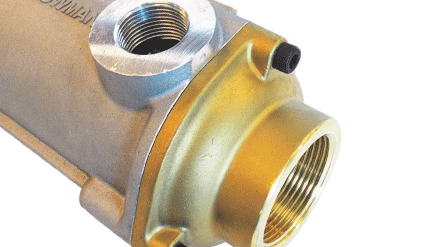
The image above is representative of swimming pool heat exchangers for boilers rated from 100 – 300 kW.

Note – Ratings and weight are specifically relevant to the titanium versions of each heat exchanger. Download the brochure for more detailed information.

The image above is representative of swimming pool heat exchangers for boilers rated from 170 – 1055 kW.

Note – Ratings and weight are specifically relevant to the titanium versions of each heat exchanger. Download the brochure for more detailed information.

Swimming Pool Boiler Range – Typical Performance and Dimensions

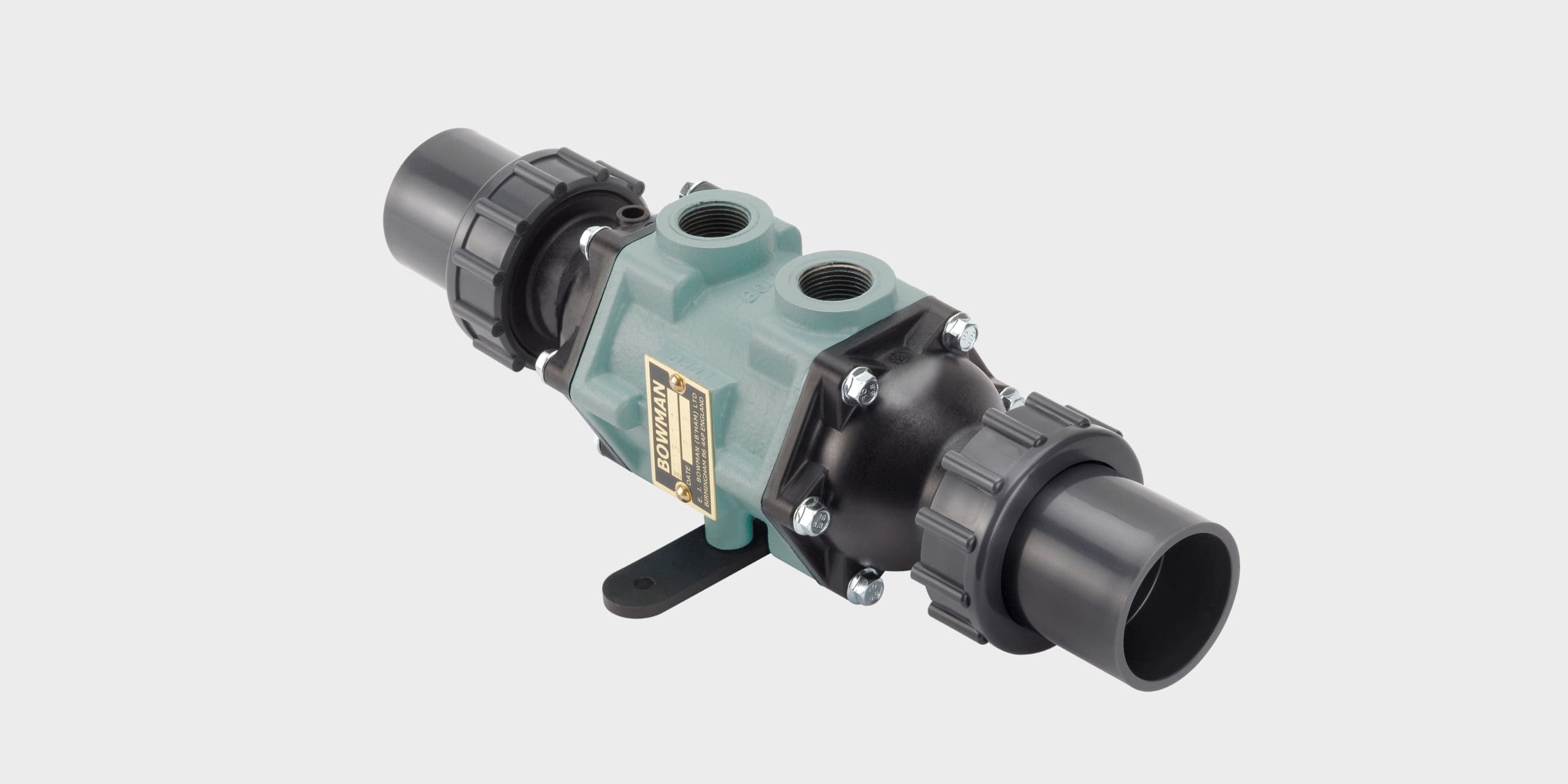
The images above are of swimming pool heat exchangers for renewable energy sources. The top image is representative of the 5113-3, 5113-5 and 5114-5 heat exchangers and the second image shows the 5115-5 unit.

Note – Weight provided are for the titanium versions.

More detailed product information can be found on all of the heat exchangers in the range by clicking the link for the specific product or downloading the product data sheets below.

Metric Connections – European Specification 

For spas, hot tubs and small private pools

For mid sized private and commercial pools

For large commercial and public pools

For more information on JK190-5118-3 and PK190-5119-3 please contact Bowman.

For transferring heat from solar panels and heat pumps

Imperial Connections – North America

For spas, hot tubs and small private pools

For mid sized private and commercial pools

For large commercial and public pools

For more information on JK190-5110-3 and PK190-5111-3 please contact Bowman.

For transferring heat from solar panels and heat pumps

Downloads

No download content found.

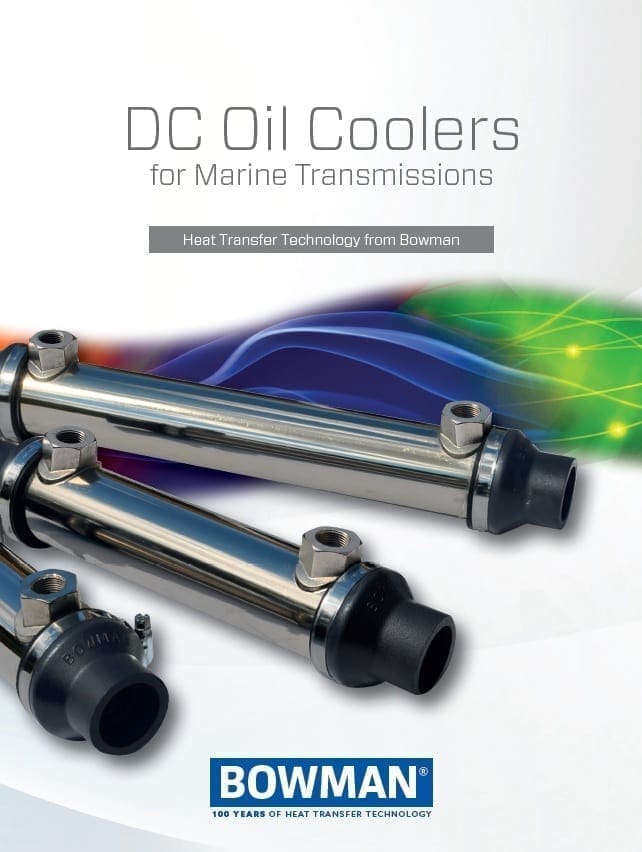
DC Oil Coolers

Technical sales brochure includes product information, ratings charts, drawings and dimensions for the standard product range.
Download

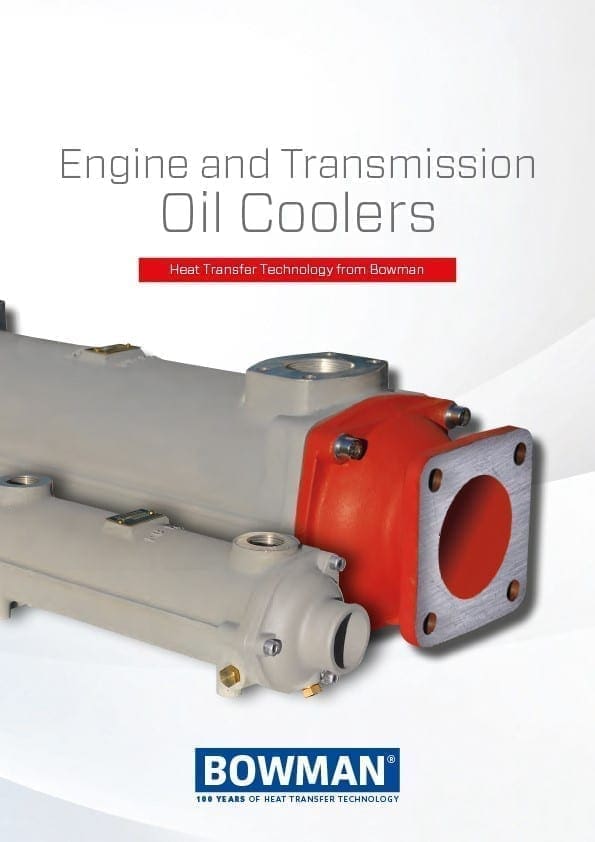
Engine and Transmission Oil Coolers

Technical sales brochure includes product information, ratings charts, drawings and dimensions for the standard product range.
Download

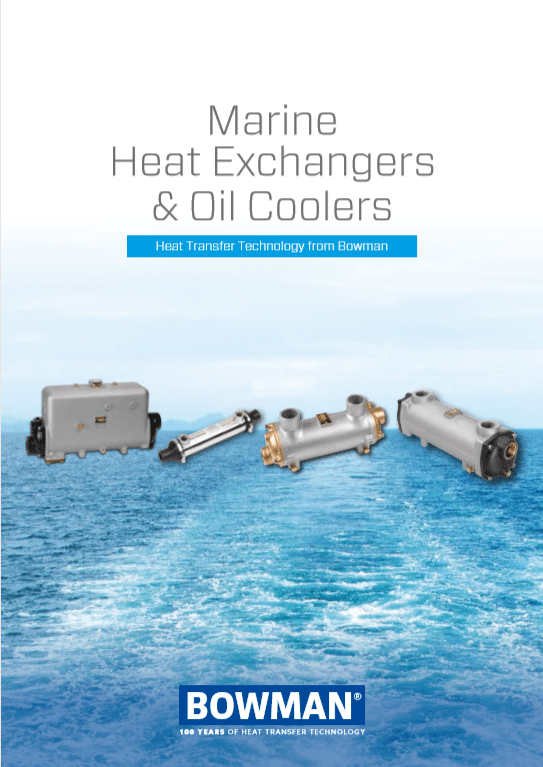
Marine Heat Exchangers

The brochure provides an overview of the products that are used for marine applications including engine and transmission coolers and heat exchangers for hydraulic deck machinery.
Download
  • Swimming Pool Heat Exchangers

    Technical sales brochure includes product information, ratings charts, drawings and dimensions for the standard product range.

  • Swimming Pool Heat Exchangers

    Technical sales brochure includes product information, ratings charts, drawings and dimensions for the standard product range.

  • Swimming Pool Heat Exchangers

    Technical sales brochure includes product information, ratings charts, drawings and dimensions for the standard product range.

  • Swimming Pool Heat Exchangers

    Technical sales brochure includes product information, ratings charts, drawings and dimensions for the standard product range.

Technical sales brochure includes product information, ratings charts, drawings and dimensions for the standard product range.

Installation Manual for Swimming Pool Heat Exchangers

Technical sales brochure includes product information, ratings charts, drawings and dimensions for the standard product range.

5113 Product Profile

Technical sales brochure includes product information, ratings charts, drawings and dimensions for the standard product range.

5113 Product Profile

Technical sales brochure includes product information, ratings charts, drawings and dimensions for the standard product range.

5113 Product Profile

Technical sales brochure includes product information, ratings charts, drawings and dimensions for the standard product range.

5113 Product Profile

Technical sales brochure includes product information, ratings charts, drawings and dimensions for the standard product range.

Technical sales brochure includes product information, ratings charts, drawings and dimensions for the standard product range.

Installation Manual for Swimming Pool Heat Exchangers

Technical sales brochure includes product information, ratings charts, drawings and dimensions for the standard product range.

5113 Product Profile

Technical sales brochure includes product information, ratings charts, drawings and dimensions for the standard product range.

5113 Product Profile

Technical sales brochure includes product information, ratings charts, drawings and dimensions for the standard product range.

5113 Product Profile

Technical sales brochure includes product information, ratings charts, drawings and dimensions for the standard product range.

5113 Product Profile

Technical sales brochure includes product information, ratings charts, drawings and dimensions for the standard product range.

FAQs

FAQs

Mechanical equipment, such as internal combustion engines, gearboxes and transmission systems rely on oil to lubricate moving internal components, enabling them to run freely, whilst reducing wear to metallic surfaces.

In addition to lubrication, engine oil also acts as a coolant, to remove surplus heat from mechanical equipment. For example, a hot engine transfers heat to the oil, which then circulates through a heat exchanger (also known as an oil cooler), using either air or water to cool the oil.

All oils have a recommended operating temperature range and if this is exceeded, the viscosity of the oil can be weakened, reducing its lubrication qualities. Should excessive heat continue to build up, the oil’s ability to lubricate components will be significantly reduced and in extreme cases, the viscosity may break down, creating conditions where the metal components overheat, leading to premature wear. In extreme cases this could even result in a catastrophic component failure.

This situation can occur where equipment is to be operated at high speeds for extended periods, or where climatic conditions dictate higher ambient air temperatures. In such conditions, adding an oil cooler to the lubrication system, will remove the excess heat, reducing the oil’s temperature so that it remains within the correct range to protect the equipment, prolonging its operating life.

Whether an air or water cooled oil cooler is used depends on application and operating conditions.

Bowman oil coolers are water cooled ‘shell and tube designed units that are robust and reliable over a wide range of operating conditions. For more information about Bowman Oil Coolers.

Selecting the correct heat exchanger is very important to ensure the pool heats up quickly to desired temperature. The main issues to consider when sizing a swimming pool heat exchanger are;

  1. Pool size – what is the water capacity? Heat exchangers are sized according to capacity, so a unit designed to heat a 80 m³ (18,000 gal) pool would be no use, if you have an 180 m³ (39,500 gal) pool.
  2. How is it heated? Usually, the choice is either a boiler or renewable energy. If it’s renewable energy, select a heat exchanger specially designed for the lower temperature water provided by solar panels or heat pumps, as these units need less energy to heat the pool to the required temperature.
  3. Boiler water temperature – however, most pools will be heated by boilers, so what is the temperature of the boiler water? Usually, it’s between 80 °C and 85 °C – the ideal temperature for pool heating. Some boilers are lower – around 60 °C. So, using 82 °C water, a heat exchanger providing 110 kW should heat your 180 m³ pool efficiently. But if the boiler water temperature is only 60 °C, the heat available to transfer drops to around 60 kW – a reduction of over 40%, so a larger heat exchanger would be required for the pool to achieve full temperature.
  4. What are the water flow rates? Flow rates are vital for the heat exchanger to transfer thermal energy to the pool. If the hot water flow rate is too low, the available energy will not be passed through the heat exchanger. However, the flow rate of the pool water is equally important. People often think it is important to generate a large temperature differential between the pool water entering and leaving the heat exchanger. They are happy, if the pipework connected to the outlet of the heat exchanger is noticeably warmer than it is at the inlet. In reality, this actually reduces the efficiency of the heat transfer process! This is because the pool water flow is too low – the water remains in the heat exchanger for too long, so a much smaller volume of water is being heated to a slightly higher temperature. However, with higher flow rates, the time taken to turn over the pool water will reduce and even a small increase in the temperature of the pool water through the heat exchanger (1.5 °C for example) will have a greater effect on the heating efficiency of the pool.

More information about heat exchanger selection, read the article ‘Why doesn’t my pool heat up faster?’

Selecting the correct heat exchanger is very important to ensure the pool heats up quickly to desired temperature. The main issues to consider when sizing a swimming pool heat exchanger are;

  1. Pool size – what is the water capacity? Heat exchangers are sized according to capacity, so a unit designed to heat a 80 m³ (18,000 gal) pool would be no use, if you have an 180 m³ (39,500 gal) pool.
  2. How is it heated? Usually, the choice is either a boiler or renewable energy. If it’s renewable energy, select a heat exchanger specially designed for the lower temperature water provided by solar panels or heat pumps, as these units need less energy to heat the pool to the required temperature.
  3. Boiler water temperature – however, most pools will be heated by boilers, so what is the temperature of the boiler water? Usually, it’s between 80 °C and 85 °C – the ideal temperature for pool heating. Some boilers are lower – around 60 °C. So, using 82 °C water, a heat exchanger providing 110 kW should heat your 180 m³ pool efficiently. But if the boiler water temperature is only 60 °C, the heat available to transfer drops to around 60 kW – a reduction of over 40%, so a larger heat exchanger would be required for the pool to achieve full temperature.
  4. What are the water flow rates? Flow rates are vital for the heat exchanger to transfer thermal energy to the pool. If the hot water flow rate is too low, the available energy will not be passed through the heat exchanger. However, the flow rate of the pool water is equally important. People often think it is important to generate a large temperature differential between the pool water entering and leaving the heat exchanger. They are happy, if the pipework connected to the outlet of the heat exchanger is noticeably warmer than it is at the inlet. In reality, this actually reduces the efficiency of the heat transfer process! This is because the pool water flow is too low – the water remains in the heat exchanger for too long, so a much smaller volume of water is being heated to a slightly higher temperature. However, with higher flow rates, the time taken to turn over the pool water will reduce and even a small increase in the temperature of the pool water through the heat exchanger (1.5 °C for example) will have a greater effect on the heating efficiency of the pool.

More information about heat exchanger selection, read the article ‘Why doesn’t my pool heat up faster?’

Selecting the correct heat exchanger is very important to ensure the pool heats up quickly to desired temperature. The main issues to consider when sizing a swimming pool heat exchanger are;

  1. Pool size – what is the water capacity? Heat exchangers are sized according to capacity, so a unit designed to heat a 80 m³ (18,000 gal) pool would be no use, if you have an 180 m³ (39,500 gal) pool.
  2. How is it heated? Usually, the choice is either a boiler or renewable energy. If it’s renewable energy, select a heat exchanger specially designed for the lower temperature water provided by solar panels or heat pumps, as these units need less energy to heat the pool to the required temperature.
  3. Boiler water temperature – however, most pools will be heated by boilers, so what is the temperature of the boiler water? Usually, it’s between 80 °C and 85 °C – the ideal temperature for pool heating. Some boilers are lower – around 60 °C. So, using 82 °C water, a heat exchanger providing 110 kW should heat your 180 m³ pool efficiently. But if the boiler water temperature is only 60 °C, the heat available to transfer drops to around 60 kW – a reduction of over 40%, so a larger heat exchanger would be required for the pool to achieve full temperature.
  4. What are the water flow rates? Flow rates are vital for the heat exchanger to transfer thermal energy to the pool. If the hot water flow rate is too low, the available energy will not be passed through the heat exchanger. However, the flow rate of the pool water is equally important. People often think it is important to generate a large temperature differential between the pool water entering and leaving the heat exchanger. They are happy, if the pipework connected to the outlet of the heat exchanger is noticeably warmer than it is at the inlet. In reality, this actually reduces the efficiency of the heat transfer process! This is because the pool water flow is too low – the water remains in the heat exchanger for too long, so a much smaller volume of water is being heated to a slightly higher temperature. However, with higher flow rates, the time taken to turn over the pool water will reduce and even a small increase in the temperature of the pool water through the heat exchanger (1.5 °C for example) will have a greater effect on the heating efficiency of the pool.

More information about heat exchanger selection, read the article ‘Why doesn’t my pool heat up faster?’

EJ Bowman Newsroom

Related Articles

Get in Touch

If you have a specific enquiry or would like to talk to one of our technical sales engineers, you can contact us by phone or email, using the contact details below. For more general enquiries, simply fill in and return the contact form for a fast response.


Tel: +44 (0)121 359 5401
E-mail: [email protected]

Local Distributors

A network of authorised, international Bowman distributors, who hold product stocks and provide local service, is also available.

This site is registered on wpml.org as a development site. Switch to a production site key to remove this banner.